
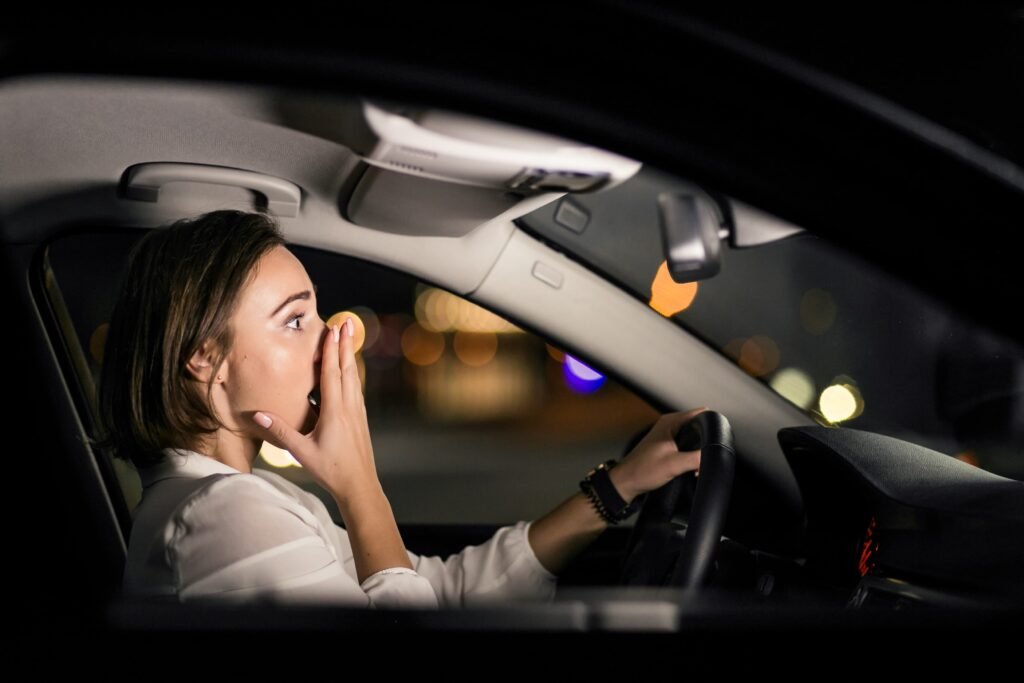
Driving home after night shift can feel terrifying when exhaustion blurs the road and staying awake becomes a fight. When did you get on this exit? You don’t remember passing the last three miles. The radio is blasting, the window is down, cold air whipping your face, but none of it matters. Your eyelids are closing again. A horn screams. You jerk awake. You’ve drifted across two lanes.
This isn’t the first time this week. Every morning after your shift ends, you climb into your car knowing you’re too tired to be driving. You tell yourself it’s fine. Everyone does it. It’s only twenty minutes. You’ve made it home a hundred times before. But one of these mornings, you might not.
If driving home after night shift terrifies you because you’re fighting to stay awake behind the wheel, you’re facing one of the most dangerous aspects of shift work that nobody talks about enough. Research from the National Highway Traffic Safety Administration shows that drowsy driving causes an estimated 100,000 crashes annually, and night shift workers are at significantly higher risk than the general population.
This isn’t about willpower or toughness. When you’re sleep-deprived, your brain literally shuts down in microsleeps whether you want it to or not. Understanding the real dangers and having solid strategies for night shift commute safety can save your life.
Why Driving Home After Night Shift Is So Dangerous
You’ve probably heard people say “I’m so tired I could fall asleep standing up.” After a night shift, that’s not an exaggeration. It’s a physiological reality.
Your Brain Is Fighting Biology
During the early morning hours, your body hits what sleep researchers call the “circadian trough.” This is when your circadian rhythm is screaming at you to be asleep. Your core body temperature drops. Your reaction time slows dramatically.
Studies from the Sleep Research Society show that being awake for 18-20 hours (which is normal after a night shift) impairs your driving ability as much as having a blood alcohol level of 0.05%. After 24 hours awake, it’s equivalent to 0.10%, which is above the legal limit in most places.
You’re not just tired. You’re cognitively impaired in ways that make driving genuinely dangerous.
Microsleeps Happen Without Warning
Here’s what makes drowsy driving so terrifying: microsleeps don’t feel like falling asleep. One second you’re awake, the next you’ve lost 3-5 seconds of consciousness, and you have no idea it happened.
Research from Harvard Medical School confirms that during microsleeps, your brain essentially goes offline. You can’t respond to hazards. You can’t steer. You can’t brake. At highway speeds, a 4-second microsleep means you’ve traveled the length of a football field completely unconscious.
The scariest part? You often don’t realize you had a microsleep until after it’s over, if you realize it at all.
Warning Signs Are Easy to Miss
According to the National Sleep Foundation, warning signs include heavy eyelids, difficulty focusing, yawning repeatedly, drifting from your lane, missing exits or traffic signs, not remembering the last few miles driven, and feeling restless or irritable.
If you’re experiencing any of these while driving home after night shift, you’re already in the danger zone.
The Real Statistics on Night Shift Commute Safety
Let’s look at the numbers, because they’re sobering.
The AAA Foundation for Traffic Safety found that drivers who slept less than 4 hours in the previous 24 hours were 11.5 times more likely to be involved in a crash compared to those who slept 7+ hours. Drivers who slept 4-5 hours were 4.3 times more likely to crash.
For night shift workers driving home after a 12-hour shift with no sleep, you’re in that highest risk category.
Studies published in Occupational and Environmental Medicine show that the risk of motor vehicle crashes for night shift workers is highest during the morning commute home, particularly between 6 AM and 9 AM. This is exactly when most night shifters are on the road, fighting against their circadian rhythm and accumulated sleep debt.
The consequences aren’t just fender benders. Drowsy driving crashes are more likely to be severe or fatal because the driver doesn’t brake before impact. There’s no attempt to avoid the collision because the driver is literally unconscious.

What Doesn’t Work: Myths About Staying Awake While Driving
Before we get to what actually helps, let’s bust some dangerous myths about staying alert during your night shift commute.
Rolling down the windows: Cold air might make you feel slightly more alert for about 90 seconds. Then your body adjusts, and you’re right back to fighting sleep.
Loud music or radio: Stimulating audio might help minimally, but it won’t override your brain’s desperate need for sleep. You can drift off mid-song.
Talking on the phone: This actually makes things worse. Phone conversations reduce your attention and reaction time even when you’re well-rested. When you’re exhausted, adding cognitive load is dangerous.
Coffee or energy drinks alone: Caffeine takes 15-30 minutes to kick in and only provides temporary alertness. It cannot replace actual sleep. Studies from the American Academy of Sleep Medicine show that while caffeine may help slightly, it does not eliminate crash risk when you’re severely sleep-deprived.
Powering through short drives: Your brain doesn’t care that it’s “only 20 minutes.” Microsleeps happen regardless of how short your drive is. Some of the worst crashes happen within miles of home.
Strategies That Actually Work for Night Shift Commute Safety
Now let’s talk about what genuinely helps when you’re driving home after night shift and fighting exhaustion.
Strategy 1: The Pre-Commute Power Nap
This is your most effective tool. If you’re dangerously tired at the end of your shift, take a 20-30 minute nap before you leave work.
Find a quiet break room, your car in the parking lot, or any space where you can close your eyes safely. Set an alarm. Even 20 minutes of sleep can significantly improve your alertness and reaction time for the drive home.
Research published in the Journal of Sleep Research shows that short naps before driving reduce crash risk and improve performance. This isn’t being lazy. This is being smart and responsible.
If you’re struggling with sleep issues beyond just post-shift exhaustion, check out our guide on how to fix night shift sleep problems for comprehensive strategies.
Strategy 2: Strategic Caffeine Use (Timing Matters)
If you’re going to use caffeine, do it strategically. Have a caffeinated drink 30-45 minutes before you leave work, not right when your shift ends. This gives the caffeine time to start working by the time you’re on the road.
Combine caffeine with a short nap (called a “coffee nap”). Drink your coffee, then immediately take a 20-minute nap. The caffeine kicks in right as you wake up, giving you maximum alertness for your drive.
But remember: caffeine is a Band-Aid, not a solution. It cannot eliminate the risk of drowsy driving when you’re severely sleep-deprived.
Strategy 3: Have an Alternate Plan Ready
Before every shift, have a backup plan for getting home safely if you’re too tired to drive.
Options include a friend or family member who can pick you up, rideshare apps already installed on your phone, public transportation routes, a coworker who lives nearby for carpooling, or permission to sleep in your car in the parking lot for an hour before driving.
Yes, these options cost money or inconvenience. Your life is worth more than $20 for an Uber or an hour of extra time.
Strategy 4: Recognize the “No-Drive” Warning Signs
You need clear, non-negotiable criteria for when you absolutely cannot drive.
Do not get behind the wheel if you’ve experienced microsleeps or nodded off during your shift, you can’t keep your eyes open while sitting in your car before leaving, you’ve had a near-miss crash or drifted lanes in the past week, your vision is blurry, or you feel disconnected from reality.
These are emergency situations. Call for a ride. Take a longer nap. Do whatever it takes, but do not drive.

Strategy 5: The Parking Lot Test
Before you leave the parking lot, sit in your parked car for 2-3 minutes with the engine off. Close your eyes. If you start falling asleep immediately, you’re too tired to drive. Take a nap or find another way home.
This simple test can save your life.
What to Do If You Start Feeling Drowsy While Driving
Despite your best efforts, sometimes drowsiness hits while you’re already on the road. Here’s what to do.
Pull Over Immediately
The second you realize you’re too tired to drive safely, get off the road. Not “in five more minutes” or “when I see a good spot.” Now.
Pull into a gas station, parking lot, rest area, or even a safe spot on the shoulder if necessary. Turn off the engine. Lock your doors. Set an alarm for 20-30 minutes and sleep.
According to the Centers for Disease Control and Prevention, pulling over for a short nap is the single most effective action you can take when drowsiness hits while driving.
Call for Help Without Shame
If you’re too tired to continue and a nap isn’t enough, call someone. A partner, friend, family member, rideshare, anyone. Explain you’re too tired to drive safely and need help getting home.
Yes, it’s inconvenient. Yes, people might be annoyed. But they’ll be a lot more upset if you crash and injure yourself or someone else.
Don’t Try to “Make It”
The most dangerous thought you can have is “I’m almost home, I can make it.” Most drowsy driving crashes happen close to home. Your brain doesn’t suddenly wake up because you’re familiar with the route.
If you’re fighting to stay awake, distance doesn’t matter. Stop driving.
Long-Term Solutions for Night Shift Commute Safety
Beyond individual trip strategies, there are bigger-picture changes that can improve your commute safety over time.
Talk to Your Employer About Shift Timing
If possible, negotiate shift schedules that align better with safer driving times. Starting slightly earlier so you leave before peak sleep pressure (before 6 AM), working shorter shifts (10 hours instead of 12) to reduce fatigue, or having longer breaks between shift blocks to recover sleep debt can all help.
Some employers offer flexible scheduling or compressed work weeks that might reduce your dangerous commute frequency.

Improve Your Overall Sleep Quality
The better you sleep during your off time, the less exhausted you’ll be at the end of shifts. Focus on creating an optimal sleep environment, maintaining consistent sleep schedules, and protecting your sleep time fiercely. Our 7-day sleep schedule reset plan offers detailed strategies for improving your overall sleep quality.
Build a Support Network
Connect with coworkers who live near you and establish carpool agreements. Having someone else in the car keeps you more alert and provides a backup driver if needed.
Join online communities of night shift workers where you can share strategies and get support for the unique challenges you face.
Know When It’s Time to Change Jobs
Sometimes the commute situation combined with night shift work is simply unsustainable and unsafe. If you’re consistently having dangerous near-misses on your drive home, it might be time to look for work closer to home or consider switching to day shift.
Your life is worth more than any job.
The Bottom Line: Your Life Is Worth Being Late
Driving home after night shift when you’re exhausted is one of the most dangerous things you do regularly. It’s more dangerous than most people realize, and it kills thousands of people every year.
You cannot tough it out. You cannot power through. You cannot let your guard down just because you’re “almost home.” Your brain will shut down whether you want it to or not, and when it does while you’re driving 60 mph, the results can be catastrophic.
The strategies in this article work, but only if you actually use them. That means planning ahead, recognizing your limits, and being willing to make different choices even when they’re inconvenient or expensive.
Nothing is worth risking your life over. Not saving twenty bucks on a rideshare. Not avoiding an awkward phone call. Not proving you can handle anything. Not being on time.
If you’re too tired to drive safely, don’t drive. It’s that simple and that important.
Stay safe out there. Your life matters, and the people who love you want you to make it home.

Need More Night Shift Safety Strategies?
Exhaustion isn’t just dangerous for driving. Learn how to maintain your energy throughout your shift with our comprehensive guide on how to stay energized on night shifts with science-backed strategies.
Struggling with overwhelming fatigue that goes beyond normal night shift tiredness? Our guide on managing night shift anxiety can help you address the mental health aspects of chronic exhaustion.
Join the Nightshifters Community | Request a specific night shift guidance
Join our community of night shift workers who understand the challenges you face. Share your commute safety tips, get support from others navigating the same dangers, and find practical solutions that work in real life.
Have you had a close call driving home after night shift? What strategies help you stay safe? Drop your experience in the comments below. Your story might save someone’s life.