
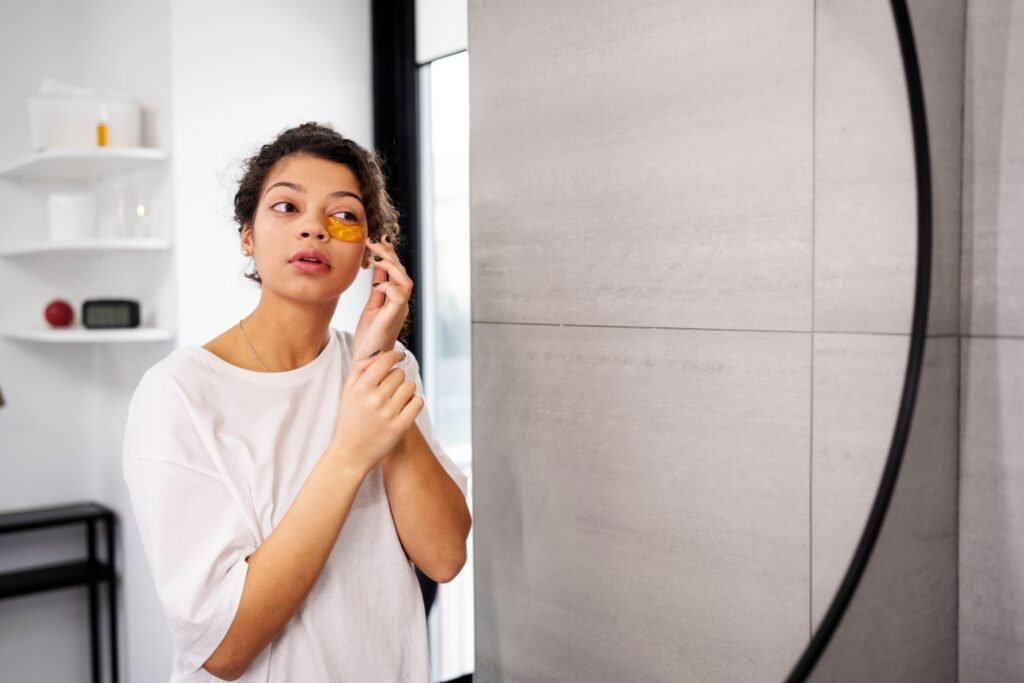
You have noticed it in the bathroom mirror. Not the dramatic transformation of a bad night’s sleep, but something slower and quieter. A dullness that doesn’t lift after a good rest day. Dark circles that no longer disappear with a decent sleep. Skin that looks somehow older than it should, drier than you remember it being a few years ago, less capable of bouncing back. You tell yourself it’s just the job. The long hours, the weird schedule, the fluorescent lighting.
You’re right. But the mechanism running underneath that explanation is far more specific and far more interesting than “stress and tiredness.” Your night shift skin problems are not about looking tired. They’re about your skin’s internal biological clock being forced to run backwards, missing the repair window it has been genetically programmed to use since before you were born, every single time you go to work.
Night shift skin health is a real, documented, scientifically specific phenomenon with a clear biological explanation. Understanding it doesn’t just explain why your skin looks the way it does. It tells you exactly what to do about it, and it will almost certainly change how you think about your skincare routine entirely.
Your Skin Has Its Own Clock, and Night Shift Is Breaking It
How does night shift affect your skin’s natural repair cycle?
Most people think of skin as a passive organ. Something that covers you and occasionally breaks out or gets dry. The reality is far more sophisticated. Every single cell in your skin, from the keratinocytes in your outer layer to the fibroblasts in your dermis that produce collagen, contains its own molecular clock. These are not metaphors. They are actual genes called BMAL1, CLOCK, PER, and CRY that tick through a precise 24-hour cycle and govern exactly when your skin does what.
Research published in the International Journal of Molecular Sciences in 2024 confirmed that your skin’s circadian clock coordinates a defense network managing UV damage repair, cell proliferation, inflammatory response, oxidative stress, and hormonal signaling. Every one of these functions has a preferred time, a biological window in which it performs at peak capacity. The entire system is built around the assumption that you are awake during daylight and repairing during darkness.
The finding that stops most people cold: keratinocytes, the primary cells of your outer skin layer, proliferate up to 30 times more at night than at noon. Thirty times. This isn’t a minor fluctuation. It’s your skin’s fundamental operating logic. The cells responsible for renewing your outer surface, replacing damaged cells, and maintaining barrier function are running their most critical work during the exact hours you are standing at a workstation under fluorescent lights instead of lying in a darkened room.
Night shift skin health problems aren’t cosmetic inconveniences. They’re the visible surface of a biological system operating out of phase with itself.
The Specific Ways Night Shift Damages Your Skin
Why does working nights make your skin look older and more tired?
The mechanisms are distinct and each one is worth understanding, because understanding them is what makes the practical interventions make sense rather than feeling like generic skincare advice repackaged for shift workers.
The Cortisol Problem: The Hormone That Eats Your Collagen
Your cortisol naturally follows a daily rhythm. It peaks in the morning to mobilize energy for wakefulness, then declines through the day, reaching its lowest point during the night hours when your body is supposed to be in repair mode. That low-cortisol window matters for your skin in a very specific way. When cortisol is low, growth hormone surges, blood flow to the skin increases, and collagen synthesis accelerates. It’s your skin’s repair shift, and it only runs when cortisol steps back.
Night shift disrupts this rhythm completely. Research on sleep deprivation and cortisol published in the journal Brain, Behavior, and Immunity found that even partial sleep loss elevated cortisol levels by 37 to 45% in subsequent evenings. For night workers whose cortisol pattern is chronically inverted, the hormone is elevated precisely during the hours when the skin expects it to be low. The result is direct: elevated cortisol activates enzymes called matrix metalloproteinases that degrade both collagen and elastin. Your skin loses structural protein at an accelerated rate while simultaneously being unable to synthesize replacement collagen at normal capacity because the growth hormone window that drives that synthesis has been suppressed.
The visible consequences accumulate over months and years: fine lines that deepen faster than expected, reduced skin firmness and elasticity, a general loss of the plumpness and resilience that younger skin maintains naturally. This is night shift skin health declining through a hormonal mechanism that no topical cream fully compensates for.
The Repair Window You’re Missing Every Single Night
Dermatology research published in PMC confirmed what skin biologists have known for years: DNA repair of UV-damaged skin cells peaks at night. Your skin spends your waking hours absorbing UV radiation, pollution, and environmental oxidative stress. The biological expectation is that nighttime darkness triggers the repair cascade that addresses all that accumulated damage. Mitosis in skin cells peaks around 11:30 PM. DNA synthesis peaks around 3:30 PM in preparation for that cellular repair burst.
When you’re awake and working during those hours, you’re not just missing the repair window. You’re also preventing it from functioning properly by exposing yourself to artificial light, particularly the blue-spectrum light from fluorescent workplace lighting, that signals your skin’s peripheral clocks that it’s still daytime. Research from the International Journal of Cosmetic Science confirmed that disruption of the skin’s circadian balance, even by a consistently late bedtime, has measurable negative effects on skin hydration, barrier function, and regeneration. For night workers whose sleep window is displaced by six to eight hours from the biological ideal, those effects aren’t occasional. They’re structural.
The DNA damage that accumulates from this missed repair window isn’t only about aging. A 2024 review in the International Journal of Molecular Sciences found that circadian disruption increases the risk of skin cancer by impairing the body’s ability to catch and repair mutations from UV exposure. Night shift skin health is not a vanity concern. It has clinical implications that extend well beyond appearance.
Dark Circles, Puffiness, and the Mechanics of Looking Exhausted
The under-eye changes that night shift workers notice most acutely have a precise biological explanation that goes beyond “you’re tired.” When sleep patterns are disrupted, the HPA axis sustains elevated cortisol secretion that promotes sodium retention and increased vascular permeability. Fluid that would normally drain efficiently during sleep accumulates instead in the loose, thin tissue under the eyes. Blood vessels dilate, making the bluish tint of blood pooling more visible through the thin under-eye skin. Inflammatory cytokines like IL-6 increase capillary permeability, amplifying the leakage.
Night shift skin takes this hit differently from occasional poor sleep because the problem is chronic and circadian rather than situational. A few nights of poor sleep produces under-eye puffiness that clears after a good rest. Years of circadian-displaced sleep produces structural changes in the under-eye area, including gradual collagen loss that thins the already fragile skin there, making the blood vessels permanently more visible regardless of how much sleep you’ve had in the past week.
Blue Light: The Compounding Factor Nobody Mentions
Working under artificial light all night is not neutral for your skin. Research published in the Archives of Dermatological Research in 2025 found that 480nm blue light, the type emitted by fluorescent workplace lighting and screens, penetrates directly to the dermal papillary layer and disrupts the circadian clock genes CLOCK and BMAL1 in skin cells, triggering a cascade of oxidative stress, inflammation, and barrier protein disruption. The pathway involves reactive oxygen species, weakened filaggrin synthesis, and what researchers describe as a “vicious circle” of oxidation, inflammation, and microbiota imbalance.
For night shift workers spending eight to twelve hours under blue-spectrum artificial lighting, this is not a theoretical exposure. It’s a nightly, cumulative assault on the circadian machinery that governs night shift skin health repair. Your skin is receiving the biological signal that it’s daytime throughout the hours it’s programmed to spend repairing the damage from the previous day.
The Night Shift Skincare Routine That Actually Makes Biological Sense
What skincare routine should night shift workers follow?
Most skincare advice is written for people who sleep at night and live their days in sunlight. For night shift workers, the timing guidance in particular is often reversed or irrelevant. Here’s what the biology actually supports.
Reframe Your “Night” as Your Actual Sleep Window
Your skin’s repair processes are triggered by darkness and the drop in cortisol that accompanies genuine sleep, not by the clock reading a particular time. When you sleep from 8 AM to 4 PM, that window is your biological night. Your skincare routine before sleeping, regardless of what time it is, should be built around supporting the repair processes your skin is about to attempt.
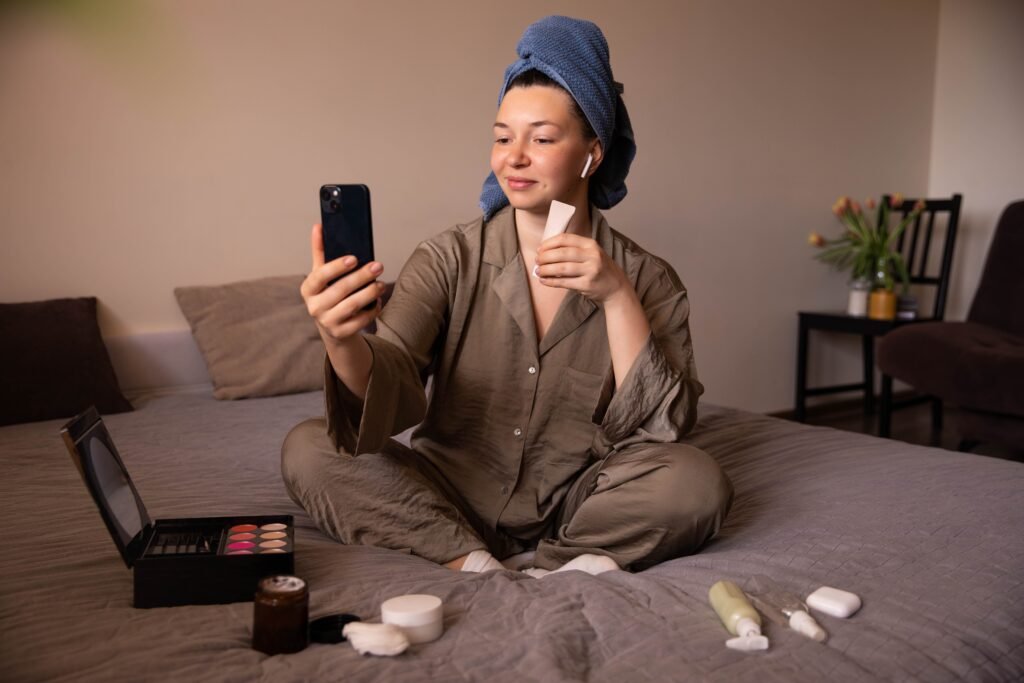
Before your daytime sleep: focus on barrier support and hydration. Research on skin circadian rhythms confirms that transepidermal water loss is higher in the morning hours, meaning your skin loses moisture most aggressively during the hours immediately after your shift. An occlusive moisturizer applied before sleep traps moisture during your skin’s most vulnerable period. Look for ingredients like ceramides, which directly support the barrier proteins your skin needs to synthesize overnight, and hyaluronic acid, which maintains hydration in the outer skin layers.
Retinol, if you use it, belongs in your pre-sleep routine rather than before your shift. Skin permeability reaches its maximum around 3 to 4 AM in a conventional schedule, which in a night shift worker’s displaced biology roughly corresponds to the early hours of their sleep period. Active ingredients penetrate more effectively during this biological window.
Antioxidants Before Your Shift, Not After
This is the most counterintuitive reversal in the night shift skin health equation. For day workers, vitamin C serums belong in the morning to protect against daytime UV and pollution exposure. For night shift workers heading into eight hours of blue-spectrum artificial light exposure, antioxidant protection belongs before the shift.
Vitamin C neutralizes free radicals generated by blue light before they can trigger the oxidative cascade that disrupts your skin’s clock genes. Niacinamide strengthens the skin barrier and reduces the inflammatory response that blue light exposure promotes. Applied before your shift, these ingredients provide the protective function that daytime workers get from morning application. Applied after your shift, you’re locking the barn after the horse has left.
Sunscreen Is Not Optional Even When You Work Nights
This one surprises night shift workers consistently. If you drive home in morning light, even through car windows that filter UV-A partially but not UV-B, your skin is receiving daytime radiation during its most vulnerable circadian window. Your skin has been in repair mode during your sleep and has not yet completed its transition to daytime defense mode. The research on circadian skin clocks confirms that skin’s repair machinery and its UV defense machinery run on different schedules. Catching morning sun during the repair window is more damaging than equivalent UV exposure at midday for a day worker.
Sunscreen applied before driving home, and again if you’re outdoors in the afternoon before your shift, is night shift skin health maintenance, not optional aesthetic concern.
Address the Under-Eye Situation Directly and Consistently
The mechanical contributors to under-eye puffiness in night shift workers respond to straightforward interventions. Sleeping with your head slightly elevated reduces the fluid pooling that creates morning puffiness regardless of what time “morning” is for you. A cold compress or chilled eye mask in the first minutes after waking constricts blood vessels and accelerates drainage from the periorbital tissue. Caffeine-containing eye creams work through the same vasoconstriction mechanism and are genuinely useful here, not just marketing.
Reducing sodium in the meals you eat immediately before sleep decreases fluid retention overnight. Staying hydrated during your shift reduces the compensatory fluid retention your body triggers in response to dehydration, a common contributor to under-eye puffiness that night workers underestimate.
Consistency Beats Perfection
The biological evidence on night shift skin health points toward one principle above all others: consistency of schedule matters more than any individual product. Research on circadian disruption and skin damage confirms that the skin’s peripheral clocks are capable of partial adaptation when the stimulus is consistent. A night shift worker on consistent nights whose sleep window is regularly the same six to eight hours gives their skin’s clock genes a stable signal to entrain to. A rotating shift worker whose schedule changes weekly gives their skin’s circadian machinery no stable reference point to adapt to.
If you can cluster your night shifts and maintain a consistent sleep-wake pattern across your working week and into your days off, your skin has a fighting chance of partially adapting. If your schedule rotates unpredictably, no skincare routine fully compensates for the circadian chaos that your skin’s repair cycle is navigating.
The Longer View on Night Shift Skin Health
The changes you’re seeing aren’t your imagination and they aren’t simply fatigue. Night shift skin health declines through a set of documented, specific biological mechanisms: a missed repair window where keratinocytes should be proliferating thirty times faster than they do at noon; a cortisol curve inverted at precisely the moment when collagen should be synthesizing; blue light disrupting skin clock genes during eight hours of artificial lighting; and a nighttime UV exposure risk that day workers never face.
None of this is reason to panic, and none of it is irreversible if addressed thoughtfully. Skin has genuine regenerative capacity and partially responds to strategic support. But treating night shift skin the same way you treated your skin before you started nights, with a routine built for someone sleeping in the dark and living in daylight, is the main reason the products stop working and the changes keep accumulating. Your skin is running on a different schedule now. Your routine needs to reflect that.
Join the Community | Get Personalized Guidance
Have you noticed changes in your skin since starting nights? What’s worked, what hasn’t, and what do you wish someone had told you sooner? Drop it in the comments. Real experience from people actually on this schedule is worth more than any dermatology blog written for people who sleep at night.