
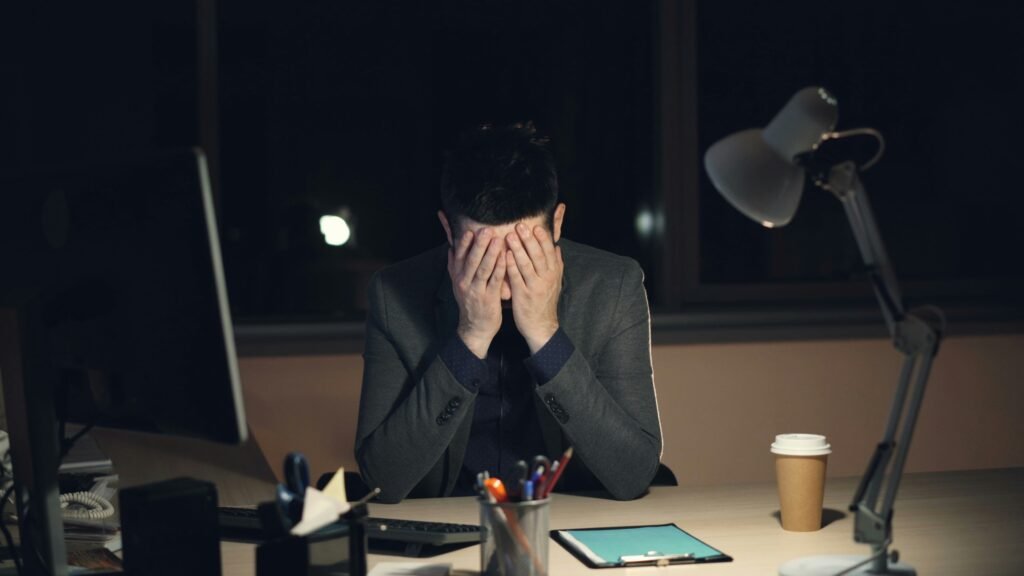
Most night shift workers are doing this wrong and it’s why they feel worse after resting.
Nobody tells you about the wall. You know the one. It arrives somewhere between 2 and 4 AM, and it hits differently from ordinary tiredness. Your eyes feel heavy in a specific way. Your reaction time slows. Simple decisions take longer than they should. You’ve been awake for hours that your body insists should be sleep hours, and no amount of coffee is fully compensating. This is not weakness. This is biology. And there is one intervention that research consistently shows addresses it more effectively than caffeine, more safely than energy drinks, and more durably than pushing through.
Napping on night shift is not a luxury, a sign of laziness, or something to feel guilty about. It is the most evidence-backed fatigue countermeasure available to overnight workers, and the research is specific enough to tell you exactly how long to sleep, exactly when, and exactly how to wake up without the grogginess that makes many night workers avoid it. This guide covers all of it.
Why Napping on Night Shift Is Different From Any Other Kind of Napping
What makes napping during night shift work unique?
Napping on night shift operates against a biological backdrop that makes both the need and the strategy fundamentally different from an afternoon nap on a day off. Your body’s circadian system, the internal clock that coordinates virtually every physiological function across a 24-hour cycle, runs a predictable alertness curve that troughs sharply between 2 and 5 AM. This is your circadian nadir: the biological window during which core body temperature drops to its daily minimum, melatonin peaks, and every system in your body is simultaneously signaling that sleep should be happening right now.
Working through this window is what night shift work requires. Napping on night shift during or approaching this window is what the research shows can meaningfully counteract its effects.
The reason napping on night shift requires its own strategy, separate from general nap advice, is sleep inertia: the period of grogginess, disorientation, and performance impairment that occurs when you wake from certain stages of sleep. Napping on night shift carries a specific sleep inertia risk that daytime naps don’t, because your circadian system is strongly promoting deep sleep during the overnight hours. Wake from the wrong sleep stage at the wrong time, and you can feel significantly worse than you did before the nap. The research on napping on night shift is, more than anything, a map of how to avoid that outcome while capturing the genuine benefits.
The NASA Finding Every Night Shift Worker Should Know
What does NASA research say about napping and work performance?
The study that changed how researchers and aviation authorities think about napping on night shift happened in 1995, and its findings are specific enough to act on immediately.
NASA researchers studied the effects of napping on cockpit crew performance during long-haul flights, measuring alertness and task performance across different nap conditions. The result was precise: pilots who napped for 26 minutes showed a 54% improvement in alertness and a 34% improvement in job performance compared to those who did not nap, with measurably less sleepiness toward the end of their flights. The no-nap pilots showed twice the sleepiness levels by the end of the flight.
The 26-minute duration was not arbitrary. It was the specific window that allowed pilots to capture the restorative light sleep stages — N1 and N2 — without crossing into slow-wave deep sleep, which is where sleep inertia becomes a significant problem. Harvard Health confirms the mechanism: once you enter deep sleep, typically around 30 minutes after falling asleep, waking interrupts a cycle your brain expected to complete, producing grogginess that can persist for 30 to 60 minutes.
Napping on night shift at the 20 to 26-minute mark captures the benefit while avoiding the penalty. The research has been consistently replicated across industries since 1995, and the American Nurses Association now officially recommends napping on night shift as a fatigue management strategy.
What the Most Recent Research Says About Napping on Night Shift
What does current research recommend for night shift napping?
The science on napping on night shift has advanced significantly since the NASA study, and the 2023 and 2024 research is specific enough to give night workers a precise protocol rather than a general guideline.
A 2023 study published in the Journal of Sleep Research tested 20-minute naps scheduled at exactly 2 AM during simulated night shifts in 16 participants. Compared to the no-nap condition, the nap group showed significantly lower sleepiness from 3:20 AM through 5:20 AM and meaningfully better performance on vigilance tasks through 5:40 AM. Crucially, the 20-minute nap at 2 AM did not cause sleep inertia on waking. The researchers concluded that a single 20-minute nap at 2 AM can sustain work performance for approximately three hours during the shift’s most vulnerable window.
A 2024 randomized crossover trial published in the Scandinavian Journal of Work, Environment and Health compared three conditions during 12-hour simulated night shifts: no nap, a 30-minute nap opportunity, and a 2-hour nap opportunity, all taken at 2 AM. The 2-hour nap produced lower error rates at the end of the 12-hour shift and during post-shift recovery. However, sleep inertia was detectable immediately after waking from both the 30-minute and 2-hour conditions, though it resolved within 10 minutes in both cases. The no-nap condition showed significantly worse performance at the end of the 12-hour shift compared to both napping conditions.
The practical reading of these findings for anyone considering napping on night shift: even a brief nap outperforms no nap for sustained shift performance, sleep inertia from a 30-minute nap resolves within ten minutes, and longer naps offer greater end-of-shift and post-shift benefits but require a buffer period before returning to safety-critical work.
A 2025 prospective observational study from Hokkaido University of 32 nurses working 16-hour night shifts added an important qualifier: napping on night shift is most effective when sleep efficiency — the proportion of time in bed actually spent asleep — reaches at least 70%. Pre-nap phone use and high sleep reactivity (difficulty falling asleep when stressed) were the two biggest barriers to achieving that efficiency. The researchers recommended that nurses limit screen time before napping on night shift and consider their pre-nap environment as carefully as the nap duration itself.

The Hidden Cardiovascular Benefit of Napping on Night Shift
Does napping on night shift protect your heart?
This finding is newer and less widely known than the performance data, and it deserves far more attention.
Night shift workers experience what researchers call blunted blood pressure dipping: normally, blood pressure drops 10 to 20% during sleep, a pattern that protects cardiovascular health. Night shift workers, whose sleep is displaced and disrupted, repeatedly experience abnormal blood pressure patterns during overnight hours. Over years of night shift work, this repetitive exposure is now understood as a meaningful contributor to the elevated cardiovascular disease risk that night workers face.
A 2025 review published in the American Journal of Industrial Medicine examined whether napping on night shift could restore normal blood pressure dipping patterns during shifts. The conclusion was significant: restoration of normal blood pressure patterns during night shift work is achievable with strategic napping, and over time this may reduce the risk of cardiovascular disease in night shift workers.
A randomized crossover trial by University of Pittsburgh researchers tested different nap durations specifically for their cardiovascular effects during simulated night shifts. Results indicated that longer nap durations, 60 minutes or more, produced greater restoration of healthy blood pressure dipping compared to shorter naps. For night workers focused primarily on performance and alertness, the 20 to 30 minute window remains optimal. For those with cardiovascular risk in mind, longer naps when structurally possible carry additional protective benefit.
Napping on night shift is no longer just a performance strategy. It is emerging as a partial cardiovascular intervention for a population that badly needs one.
The Napping on Night Shift Timing Guide: When to Sleep and for How Long
Best Time and Duration for Napping on Night Shift
The research converges on clear recommendations that vary by the goal of the nap.
For maximum alertness and performance during the shift: Nap between 2 and 4 AM, for 20 to 26 minutes. This is the window identified by the 2023 Journal of Sleep Research trial as producing the greatest alertness benefit during the most biologically vulnerable portion of the overnight, without producing meaningful sleep inertia on waking. Set an alarm. Do not rely on waking naturally. The circadian environment during this window powerfully promotes deeper sleep, and without an alarm, a 20-minute nap can become a 90-minute one that leaves you significantly worse off.
For end-of-shift performance and post-shift recovery: If your workplace allows it, a longer nap of 90 to 120 minutes earlier in the shift, typically between 10 PM and midnight before the circadian trough deepens, produces the greatest sustained performance benefit across the full 12 hours. The 2024 Scandinavian Journal crossover trial found that 2-hour naps taken at 2 AM improved performance at the end of a 12-hour shift compared to both shorter napping and no napping, but schedule this with a 10 to 15 minute buffer after waking before returning to tasks requiring sharp cognitive performance.
For cardiovascular benefit: Longer naps, 60 minutes or more, appear to restore blood pressure dipping more effectively than shorter ones. If your shift allows supervised downtime during its quieter hours, the cardiovascular case for napping on night shift longer is increasingly strong.
What to avoid: Napping on night shift for exactly 30 to 60 minutes sits in a research-identified problem zone. You are likely to enter slow-wave sleep but not complete a full cycle, producing significant sleep inertia without the full restorative benefit of a complete cycle. The research on napping on night shift is fairly consistent on this point: nap short (under 30 minutes) or nap long (90 minutes or more, to complete a cycle), but avoid the middle zone where possible.
The Prophylactic Nap: Napping Before Your Night Shift Starts
Should you nap before a night shift starts?
Yes, and this is one of the most underused strategies in the napping on night shift toolkit.
A prophylactic nap, taken before a night shift rather than during it, pre-loads your alertness reserve before the biological trough arrives. Research consistently shows that 1 to 2 hours of sleep in the late afternoon before a night shift meaningfully reduces fatigue during the shift’s overnight hours, extends the window before peak sleepiness arrives, and improves performance particularly during the 3 to 5 AM circadian nadir.
The timing for a prophylactic nap matters. Taking it too early, immediately after waking from your previous main sleep, reduces its effectiveness because sleep pressure hasn’t rebuilt sufficiently. Aim for a 1 to 2 hour nap in the 2 to 4 hours before your shift begins. For a nurse starting at 7 PM who woke at noon, this means a prophylactic nap around 4 to 5 PM. This is distinct from extending your main sleep. It is a deliberate, timed additional sleep period intended specifically to reduce the need for napping on night shift during the most difficult overnight hours.
The Hokkaido University study of night shift nurses specifically noted that prophylactic naps before the shift were one of the factors associated with better nap quality and efficiency during the shift itself, suggesting a cumulative benefit across the full overnight period.
Why You Feel Terrible After Some Naps: The Sleep Inertia Explanation
Sleep Inertia and Napping on Night Shift Explained
Sleep inertia is the grogginess, disorientation, and performance impairment that occurs when you wake from slow-wave deep sleep before completing the recovery cycle. It is the reason many night workers try napping on night shift once, feel worse afterward, and conclude that napping doesn’t work for them. The nap wasn’t the problem. The duration or timing was.
Deep sleep begins approximately 30 minutes after falling asleep. If you nap for 45 minutes during the circadian trough, you are very likely to enter deep sleep and then be interrupted before your brain has completed what it started. The result is that you wake feeling more impaired than you were before sleeping, and that impairment can persist for up to 60 minutes.
The solution when napping on night shift is not avoiding naps. It is avoiding the 30 to 60 minute duration that most reliably produces problematic sleep inertia. A Flinders University study comparing nap durations found that a 10-minute nap produced the most immediate improvement in alertness and cognitive performance, with benefits lasting up to 155 minutes. The 20-minute nap produced improvements emerging around 35 minutes after waking, lasting through 125 minutes. The 30-minute nap produced a period of impaired alertness immediately on waking, indicating the onset of sleep inertia.
When napping on night shift, build a 10-minute post-nap buffer into your schedule before returning to demanding tasks. Use that window for basic orientation: standing, moving around, drinking water. The sleep inertia from a correctly timed short nap resolves quickly. Give it the space to clear.
Practical Setup for Napping on Night Shift
How do you actually nap effectively during a night shift?
The environment for napping on night shift needs three things: darkness, quiet, and a horizontal position if possible. Each matters more than it might seem. Light exposure during the napping window disrupts melatonin production at precisely the moment your body is trying to enter sleep. Noise prevents sleep onset and causes lighter sleep stages. Even a reclined chair produces shorter sleep latency and better sleep quality than sitting upright.
If your workplace has a dedicated nap room, use it. Research shows that dedicated quiet spaces with darkness reduce sleep onset time by measurable margins compared to regular break rooms. If no dedicated space exists, a sleep mask and earplugs or noise-cancelling earphones are the minimum viable setup for napping on night shift in a hospital corridor, staffroom, or locker room.
Set two alarms rather than one. Set the first for your intended nap end point: 20 or 26 minutes after you expect to fall asleep, not after you lie down. Set a second alarm two minutes later as backup. The cost of oversleeping when napping on night shift is not the extra minutes of rest. It is the sleep inertia you will carry through the shift’s most demanding subsequent hours.
Limit phone use in the 15 minutes before napping on night shift. The Hokkaido University study specifically identified pre-nap screen time as a barrier to achieving the sleep efficiency needed to make the nap restorative. A few minutes of complete darkness and stillness before the alarm starts is more valuable than scrolling until the last second.
Napping on Night Shift and the Drive Home
Does napping on night shift make the commute home safer?
The drowsy driving risk after a night shift is one of the most serious and under-discussed safety concerns in overnight work. Being awake for 18 consecutive hours impairs driving performance to the equivalent of a blood alcohol content of 0.05%. At 24 hours awake, that impairment reaches the equivalent of 0.10% BAC, above the legal driving limit in every US state.
The 2024 Scandinavian Journal crossover trial specifically noted the driving risk at shift end as a key reason to study napping on night shift: workers who napped during the shift showed lower error rates at shift end compared to the no-nap group. Napping on night shift is not only a within-shift safety strategy. It extends protection to the commute home.
If your shift ends and you are uncertain whether you are safe to drive, a 15 to 20 minute nap in your parked car before starting the engine is supported by the same research that supports napping on night shift itself. The alternative — pushing through on adrenaline and hoping — is not an evidence-based strategy.
The Honest Case for Napping on Night Shift
Napping on night shift is not controversial in the research literature. It is controversial in workplace culture, in the internalized professional standards of healthcare workers who feel guilty closing their eyes when there is always more to do, and in facilities that have not yet caught up with the evidence.
The data is not ambiguous. Napping on night shift improves alertness during the shift. It improves performance on safety-critical tasks. It reduces error rates. It partially restores normal blood pressure patterns disrupted by overnight work. It improves mood. It extends safe driving capacity at shift end. And a correctly timed, correctly durationed nap on night shift accomplishes all of this without meaningful sleep inertia and without undermining your main sleep when you get home.
The US Healthcare Worker Fatigue Prevention Act introduced in 2024 specifically addresses napping opportunities in healthcare facilities, a legislative recognition of what the research has been establishing for three decades. Napping on night shift is not a sign that you can’t handle the schedule. It is a sign that you understand the biology well enough to work with it rather than against it.
Read our article on how to eat on night shift here
Join the Community | Get Personalized Guidance
Does your workplace allow napping on night shift? Has it made a real difference for you, or has guilt or culture made it impossible to actually use? This conversation matters. Drop your experience in the comments.
What is the best nap length during night shift?
20 to 26 minutes is ideal to improve alertness without causing grogginess.
Can napping on night shift affect daytime sleep?
Short naps do not negatively impact your main sleep if timed correctly.
Why do I feel worse after a nap?
This is due to sleep inertia, which occurs when waking from deep sleep.