
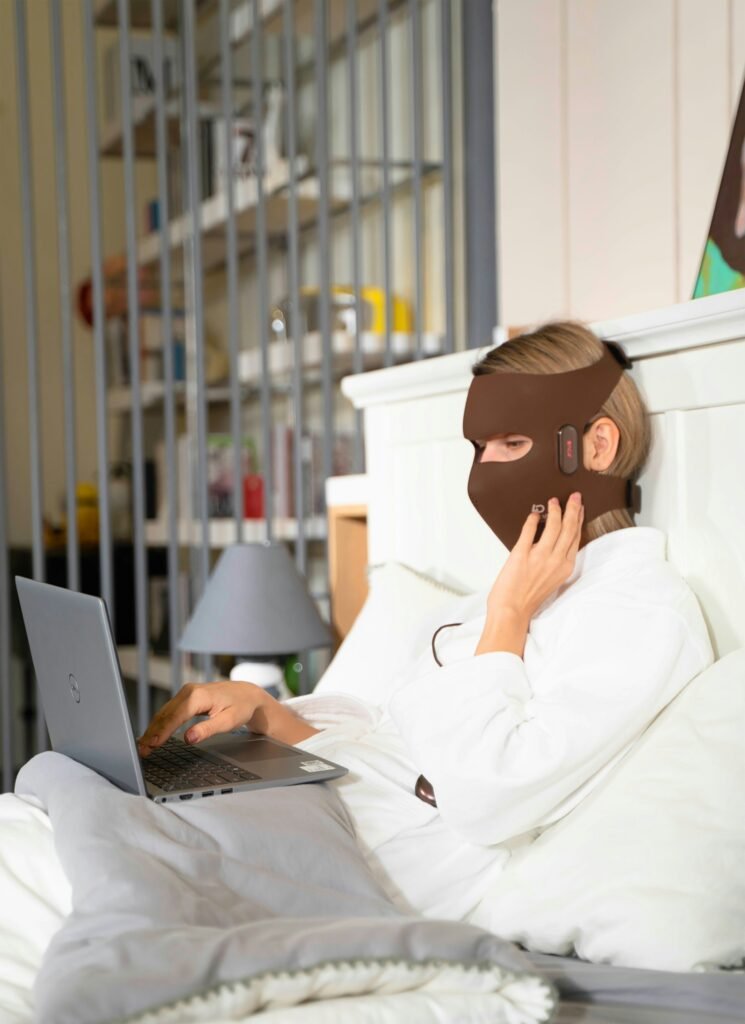
You walk out of your shift at 7 AM and the sun hits you like a physical force. Your body immediately starts misfiring. Melatonin drops. Alertness briefly spikes. Then you get home, pull the curtains, lie down, and spend two hours watching the ceiling while your brain refuses to cooperate.
That’s not tiredness. That’s your body receiving the wrong light signal at the worst possible time.
Light is the single most powerful cue your body uses to set its internal clock. Every other tool, including melatonin supplements, meal timing, and exercise, plays a supporting role. Light is the master switch. For night shift workers, that switch is being thrown in the wrong direction every single day. Light therapy for night shift workers is the science of deliberately using that same mechanism to your advantage. Done correctly, it’s the most effective non-drug intervention available for circadian disruption. Done incorrectly, it actively makes things worse. This guide covers exactly how to do it right.
How Light Therapy for Night Shift Workers Actually Works
What is light therapy and how does it reset the circadian clock?
Light therapy, also called phototherapy, uses timed exposure to specific intensities and wavelengths of artificial light to reposition the circadian clock. For night shift workers, it’s not about treating a mood disorder. It’s about training your internal timekeeper to align with your schedule rather than fight it.
Your circadian rhythm is governed by a cluster of neurons in the brain called the suprachiasmatic nucleus, or SCN. The SCN receives direct input from specialized light-sensitive cells in the retina called intrinsically photosensitive retinal ganglion cells. These cells are particularly responsive to blue wavelengths of light in the 460 to 480 nanometer range. When blue-enriched light hits these cells, the SCN suppresses melatonin and triggers wakefulness cascades. When light withdraws, melatonin rises and your body prepares for sleep.
For night shift workers, the problem is predictable. Natural morning daylight after a shift throws this system into a pattern that blocks daytime sleep and undermines overnight alertness. Research published in the journal Sleep describes circadian-informed lighting as using bright, blue-enriched light at times calculated to produce circadian delay, and dim, blue-depleted light when phase-shifting effects are not desired.
Light therapy for night shift workers works on both sides of that equation. Strategic light exposure during your shift. And deliberate light blocking afterward.
What the Research Says About Light Therapy for Night Shift Workers
Does light therapy actually work for night shift sleep problems?
The evidence here is substantial and increasingly specific.
A 2025 systematic review and meta-analysis published in Scientific Reports, drawing on 11 studies conducted between 1990 and 2023, found that light therapy significantly improved total sleep time by an average of 32 minutes and improved sleep efficiency in shift workers compared to control groups. Medium illuminance light in the 900 to 6000 lux range, applied for at least one hour during night work, produced the greatest gains in total sleep time. Higher illuminance levels improved sleep efficiency specifically.
A separate meta-analysis of 21 studies found that longer duration of light exposure between one and three hours produced greater circadian phase shifts than simply increasing intensity. Duration drives clock repositioning. Intensity alone does not.
A systematic review in Frontiers in Public Health comparing all sleep interventions for rotating shift workers found light therapy produced the largest significant effect on sleep outcomes. The effect size was 0.86. That placed it clearly ahead of cognitive behavioral approaches, pharmacological interventions, and every other non-drug strategy tested. Light therapy for night shift workers isn’t competing with other tools. It’s in a different category.
A review of 14 studies across 7 countries confirmed that blue-enriched white light above 5000 Kelvin specifically improved sleepiness in night shift workers. The researchers specifically recommended its use in healthcare settings, where nurse alertness is directly linked to patient safety.
What Kind of Light Do Night Shift Workers Actually Need?
What color temperature and lux level is most effective for light therapy?
Not all light does the same thing. This is where most people using light therapy for night shift workers go wrong.
The key variable is color temperature, measured in Kelvin. Standard household bulbs sit at 2700 to 3000 Kelvin. That warm, yellowish light has minimal effect on the circadian system. Daylight-spectrum bulbs and dedicated light therapy devices range from 5000 to 10,000 Kelvin. This blue-enriched white light directly activates the alerting pathways in the retina that night shift workers need to engage during their shifts.
What lux output should a light therapy lamp have?
Intensity matters, but within a range rather than at an extreme. The research on light therapy for night shift workers consistently uses 2000 to 10,000 lux as the therapeutic window. Standard indoor lighting sits at 200 to 500 lux. Cloudy daylight reaches around 1000 lux. A dedicated 10,000 lux lamp at arm’s length provides roughly the brightness of a clear outdoor sky without UV exposure.
The CDC’s NIOSH guidance for nurses confirms that blue wavelength light carries the strongest effect on circadian hormonal reactions, and that blue-light-blocking glasses specifically prevent these retinal signals from firing. Harvard Health Publishing reports that melatonin levels in people exposed to bright indoor light while wearing blue-blocking goggles were nearly identical to those in dim light without goggles. Blocking blue light is as effective as reducing light exposure entirely.
For practical use, a dedicated lamp rated at 10,000 lux at a specified distance is the most reliable option for light therapy for night shift workers at home. It gives you a measurable, consistent dose rather than guessing with regular bulbs.
When Night Shift Workers Should Use Light Therapy
What is the right timing for light therapy on a night shift schedule?
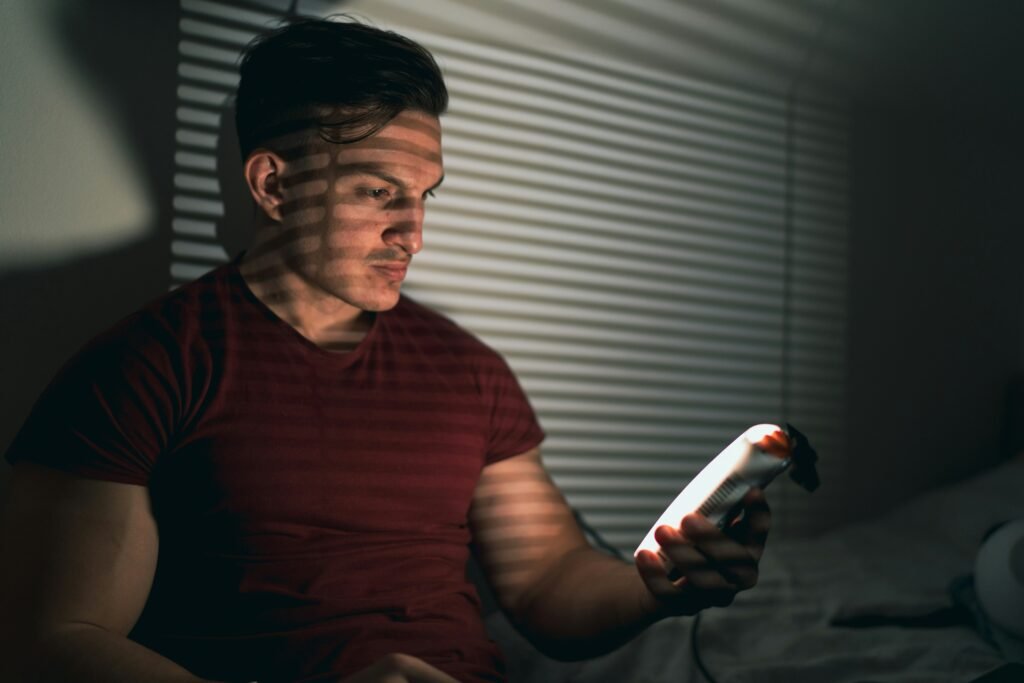
Timing is everything with light therapy for night shift workers. The same exposure that improves your alertness and shifts your clock in a useful direction at one time of night can reverse your progress if applied at the wrong point.
Your circadian clock shifts based on when light is applied relative to your core body temperature minimum. This minimum typically occurs about two hours before your habitual wake time. Light exposure before this minimum produces a phase delay, pushing your clock later. Light exposure after it produces a phase advance, pulling your clock earlier. For a permanent night shift worker, phase delay is the goal. That means strategic light exposure during the earlier portion of the shift.
The Working Time Society consensus statement published in PMC recommends bright light of at least 1000 lux at eye level between 18:00 and 04:00 for workers on slowly rotating night shifts. This window reliably delays the circadian rhythm. Exposing yourself to natural morning light during the commute home works directly against this. It triggers a phase advance and locks your body clock back toward daytime operation. This is why blocking morning light after your shift is just as important as using light strategically during it.
The Practical Light Therapy Sequence for Night Shift Workers
Here is how the timing protocol works in practice.
During the first half of your shift, bright light exposure improves alertness and begins the phase delay process. During the second half, especially approaching shift end, reduce light intensity where you can. After your shift, orange-tinted blue-blocking glasses go on before you step outside. These block the specific wavelengths that would undo the clock shift built during the night. Your bedroom should be fully blacked out.
Research on blue-light-blocking goggles worn by nurses during their morning commute home found measurable effects on sleep duration and sleep latency in the recovery period following shifts. The glasses aren’t optional finishing detail. They’re half the intervention.
How to Use a Light Therapy Lamp as a Night Shift Worker
What is the correct way to use a light therapy lamp during night shift?
Using a light therapy lamp is more straightforward than the research language suggests. The device matters less than the consistency and timing of how you use it.
For alertness during your shift, position a 10,000 lux lamp approximately 40 to 60 centimeters from your face, angled slightly downward. You don’t stare into it. You work, read, or eat in its presence. Twenty to thirty minutes of exposure during the first two to three hours of your shift is the minimum effective dose for acute alertness. Extending to one hour or more is what produces the larger circadian phase shift that improves your sleep on subsequent days.
For sleep recovery after your shift, the goal completely reverses. The lamp goes away entirely. Orange-tinted glasses replace it. Darkness is the target. A sleep mask, blackout curtains, and light blocked from around doors and windows are all part of the same intervention. They are the darkness equivalent of the lamp. They actively protect the melatonin rise your body needs to fall asleep and stay asleep.
What should night shift workers do about light on their days off?
Days off are where most night shift workers unknowingly reset everything they’ve built. Dramatically different sleep and wake times on rest days, combined with full morning daylight exposure, pulls your body clock back toward the standard schedule. You then start each run of night shifts effectively readapting from scratch.
Light therapy for night shift workers on rest days ideally means maintaining your sleep window within two to three hours of your working schedule. Even imperfectly, this preserves enough clock alignment to make each successive shift easier than the last.
For workers who also use strategic napping, our guide to napping on night shift covers the prophylactic pre-shift nap protocol in detail. Light therapy for night shift workers and a well-timed pre-shift nap are two of the few interventions that work in the same direction simultaneously. Used together, they give you overlapping fatigue protection across the full overnight period.
Light Therapy for Night Shift Workers and Mood
Can light therapy help with the mood effects of night shift work?
This is an underappreciated benefit that deserves its own mention.
Night shift workers face significantly elevated rates of depression and mood disruption. Disrupted serotonin and dopamine rhythms play a large role. So does the social isolation of working while everyone else sleeps. Light therapy for night shift workers addresses the biological side of this directly. Bright light stimulates serotonin production through retinal pathways, independent of the clock-setting function. This is why light therapy was originally developed as a treatment for seasonal affective disorder.
A randomized study of 57 rotating shift nurses divided participants into a light therapy group targeting circadian alignment and a dietary modification control group. The light therapy group reported significantly reduced fatigue, fewer work-related errors, and consistent mood improvement over 30 days. Light therapy for night shift workers is one of the few tools that targets both the sleep disruption and the mood cost of overnight work at the same time.
The Honest Picture on Light Therapy for Night Shift Workers
Light therapy for night shift workers is not a complete solution. It doesn’t eliminate the long-term health risks of shift work. It doesn’t fully replicate what sleeping and waking on a natural daylight schedule gives your body. What it does is meaningfully close the gap between where your body clock is and where your schedule needs it to be. The effects on sleep quality, alertness, performance, and mood are measurable and consistent across the research.
The evidence places light therapy for night shift workers at the top of the hierarchy for non-drug circadian interventions. It sits ahead of melatonin. It sits ahead of sleep hygiene protocols alone. It addresses the root mechanism rather than downstream symptoms.
You don’t need expensive equipment to get started. A lamp rated at 10,000 lux at a stated distance, a pair of orange-tinted blue-blocking glasses for the commute home, and blackout curtains in your bedroom cover the full protocol. The combined cost is modest compared to what disrupted sleep costs you in energy, mood, and long-term health.
Light is working on your body whether you direct it or not. The only question is whether you’re the one deciding what it does.
Join the Community | Get Personalized Guidance
Have you tried light therapy as a night shift worker? Did it change your sleep, your alertness, or your mood? Or has morning daylight been quietly working against you this whole time without you realizing? Drop your experience in the comments below. This is exactly the kind of conversation that helps other night shift workers figure out what actually works.
Pingback: Night Shift Survival Kit: Everything You Actually Need | 2026
Pingback: How to Fall Asleep After Night Shift: 7 Proven Strategies That Work | 2026
Pingback: How to Wind Down After Night Shift: The Proven Protocol That Works | 2026
Pingback: Best Sleep Schedule for Night Shift Workers: The Science-Backed Guide 2026
Pingback: How to Stay Awake on Night Shift: 8 Proven Ways to Beat Overnight Fatigue | 2026
Pingback: Night Shift and Infectious Disease Risk: 5 Brutal Reasons You Keep Getting Sick | 2026