

Your eyes burn. Again. You’re six hours into your shift and every blink feels like sandpaper scraping across your corneas. You’ve blinked maybe ten times in the last hour because you’ve been staring at screens and equipment without looking away. Your vision is getting blurry. You squeeze artificial tears into both eyes for the third time tonight, and they help for maybe twenty minutes before the burning comes back.
When you got home last week, you couldn’t read the street signs as clearly as usual. You squinted at your phone screen and the text looked fuzzy. You told yourself you were just tired, that it would be fine after some sleep. But it’s happening more often now, and you’re starting to wonder if working nights is actually damaging your eyes.
If you’ve noticed your vision getting worse or your eyes feeling constantly irritated since starting night shift work, you’re not paranoid. Research published in the International Journal of Occupational Medicine and Environmental Health shows that night shift workers are 2.7 times more likely to have compromised visual acuity compared to day workers, and studies confirm how night shift affects eyesight, significantly increases the risk of dry eye syndrome, visual strain, and even long-term vision problems.
This isn’t just about tired eyes. Night shift affects your eyesight and eye health in specific, measurable ways that go beyond normal fatigue. Understanding what’s happening to your eyes and how to protect them can help you preserve your vision for the long term.
Can Working Night Shift Damage Your Eyes?
Yes, working night shift can damage your eyes, but the extent depends on duration, your work environment, and what protective measures you take.
Multiple studies show that night shift workers face elevated risks for several eye health problems. Research from BMC Public Health found that male night shift workers had a 75% higher risk of age-related macular degeneration (AMD) compared to day workers. A study in Journal of Current Ophthalmology demonstrated that night shift work causes tear film instability and exacerbation of dry eye symptoms after just a single 12-hour shift.
The damage isn’t always immediate or dramatic. It accumulates over time through chronic exposure to artificial light, reduced blinking rates, circadian disruption affecting tear production, and constant close-range focus on screens or detailed work.
Why Night Shift Wreaks Havoc on Your Eyes
Your eyes weren’t designed for the demands of night shift work. Here’s what’s actually happening to them hour by hour.
Artificial Light Exposure Damages Your Retinal Cells
During night shifts, you’re exposed to hours of bright artificial light when your body expects darkness. This matters more than you might think.
According to research from the National Institutes of Health, exposure to light at night disrupts the natural circadian rhythm that regulates tear production and eye surface maintenance. Your eyes produce less protective melatonin, which normally acts as an antioxidant for retinal cells.
Blue light from fluorescent lighting and screens penetrates deep into your eye, reaching the retina where it can cause oxidative stress and potentially damage light-sensitive cells over time. While the blue light from screens is less intense than sunlight, you’re exposed to it at close range for extended periods when your eyes are most vulnerable.
Your Blink Rate Drops Dangerously Low
Normal blink rate is about 15-20 times per minute. When you’re focusing on screens, equipment, or detailed tasks during night shift, your blink rate can drop to 5-7 times per minute or even lower.
Studies published in PLOS ONE show that reduced blinking during shift work leads to increased tear film evaporation and instability. Each blink spreads protective tears across your eye surface. When you’re not blinking enough, your eyes dry out, become irritated, and are more vulnerable to damage.
Circadian Disruption Affects Tear Production
Your tear production follows a circadian rhythm. Normally, tear secretion decreases at night when your eyes are closed during sleep. But when you’re working nights, your eyes are open and active when tear production is naturally low.
Research from the Sleep Research Society demonstrates that circadian misalignment disrupts the autonomic nervous system’s regulation of tear glands. The parasympathetic nervous system, which controls tear secretion, doesn’t function optimally when you’re awake at the wrong times.
This mismatch means your eyes are working hard during hours when they have less natural lubrication, leading to chronic dry eye problems.
Constant Close-Range Focus Strains Your Eye Muscles
Whether you’re staring at computer screens, reading patient charts, monitoring equipment, or doing detailed assembly work, night shift jobs often require prolonged close-range focus.
Your eyes have a natural resting focus point of about 20 feet away. When you force them to focus at close range for hours without breaks, the ciliary muscles that control your lens shape become fatigued and strained.
According to the American Optometric Association, this contributes to digital eye strain, accommodation problems, and can even contribute to progressive myopia (nearsightedness) over time.
The Specific Eye Problems Night Shift Workers Face
Let’s break down the actual conditions you’re at higher risk for when working nights.
Dry Eye Syndrome
This is the most common eye problem among night shift workers. Symptoms include burning, stinging, grittiness, redness, blurred vision, and a feeling that something is in your eye.
A study in Journal of Current Ophthalmology found that all dry eye symptoms significantly worsened after a single night shift. Tear breakup time (how long tears stay on your eye before evaporating) decreased dramatically, and conjunctival redness increased.
If you’re working nights long-term, chronic dry eye can lead to corneal damage, increased infection risk, and persistent discomfort that affects your quality of life. If you’re also dealing with other health issues from night work, our guide on managing night shift physical health offers comprehensive strategies.
Compromised Visual Acuity
Night shift workers show measurably worse vision compared to day workers, even when wearing corrective lenses.
The International Journal of Occupational Medicine and Environmental Health study of over 8,000 workers found that night shift workers had significantly lower rates of good visual acuity and higher rates of inadequate vision. After controlling for other factors, night shift workers were 2.7 times more likely to have compromised vision.
This isn’t just about needing glasses. It’s about your eyes not functioning at their full capacity even with correction.
Increased Risk of Macular Degeneration
Age-related macular degeneration (AMD) is a leading cause of vision loss in older adults. Night shift work appears to accelerate this risk.
Research published in BMC Public Health analyzing data from over 12,000 people found that male night shift workers had a 75% higher risk of AMD compared to day workers. The mechanism likely involves chronic circadian disruption, oxidative stress from light exposure, and disrupted melatonin production.
AMD causes central vision loss, making it difficult to read, recognize faces, or see fine details. Early stages may be reversible, but advanced AMD causes permanent damage.
Digital Eye Strain (Computer Vision Syndrome)
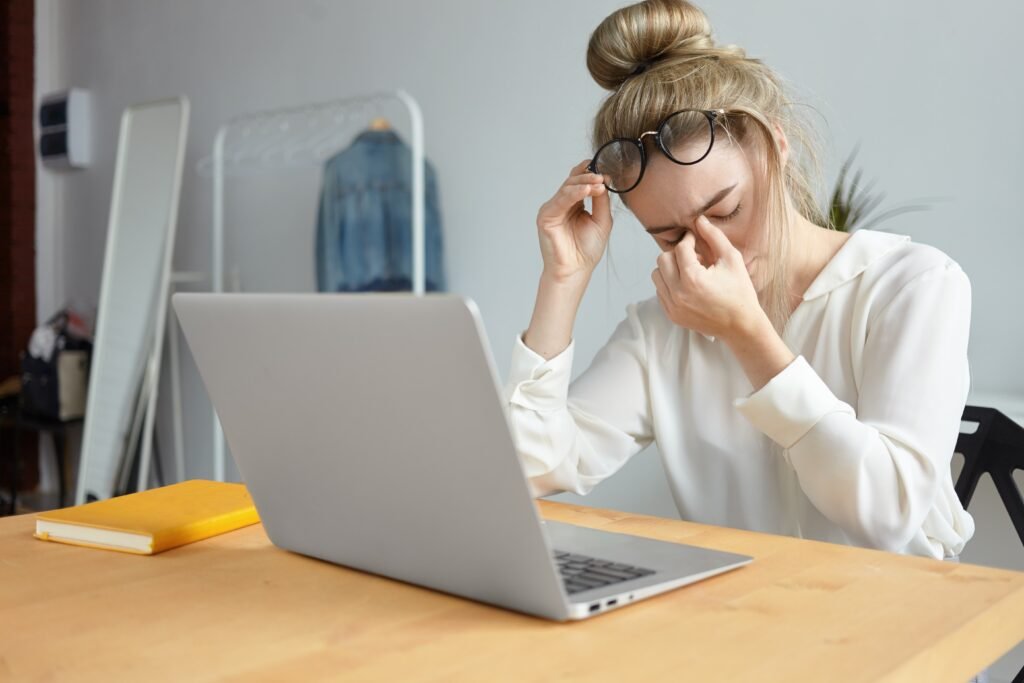
If your night shift involves screen time, you’re facing digital eye strain on top of all the other problems. Symptoms include headaches, blurred vision, dry eyes, neck and shoulder pain, and difficulty focusing.
According to the American Academy of Ophthalmology, up to 90% of people who use computers extensively experience some symptoms of digital eye strain. For night shift workers combining screen exposure with circadian disruption and reduced blinking, the impact is even worse.
Light Sensitivity and Glare Problems
Many night shift workers develop increased sensitivity to light and difficulty with glare, especially when driving home in bright morning sunlight after their shift.
This happens because your eyes dilate in low-light environments during your shift, then are suddenly exposed to bright daylight. Your pupils can’t constrict fast enough, causing temporary light sensitivity, discomfort, and increased accident risk during your commute home. Our night shift commute safety guide covers additional dangers of driving home exhausted.
FAQ: Common Questions About Night Shift and Eye Health
How can I protect my eyes during night shift?
Take regular screen breaks using the 20-20-20 rule (every 20 minutes, look at something 20 feet away for 20 seconds), blink consciously and frequently, use artificial tears preventatively, adjust screen brightness and position, ensure adequate lighting in your workspace, and wear blue light filtering glasses if appropriate.
Does blue light from night shift harm your vision?
Blue light from screens and artificial lighting can contribute to digital eye strain and may disrupt your circadian rhythm, but current research from the American Academy of Ophthalmology shows it doesn’t cause permanent retinal damage at typical exposure levels. However, the circadian disruption from light exposure at night does have indirect negative effects on eye health.
Why do my eyes feel so dry after night shift?
Night shift causes dry eyes through multiple mechanisms: reduced blink rate during focused work, circadian disruption of tear production, prolonged exposure to air conditioning or heating, and working during hours when your tear secretion is naturally lowest. These factors combine to create tear film instability and evaporation.
Can working night shift cause permanent vision loss?
Long-term night shift work is associated with increased risk of conditions that can cause permanent vision loss, including age-related macular degeneration and potentially glaucoma. However, many of these risks can be mitigated through protective strategies, regular eye exams, and addressing problems early.
Should I see an eye doctor if I work night shift?
Yes. Night shift workers should have comprehensive eye exams annually, or more frequently if you’re experiencing symptoms. Early detection of dry eye, visual acuity changes, or early signs of macular degeneration allows for intervention before permanent damage occurs.
Practical Strategies to Protect Your Eyes During Night Shift
You can’t eliminate all risks, but you can significantly reduce eye damage with targeted strategies.
Master the 20-20-20 Rule
This is non-negotiable if you work with screens or do close-range detailed work. Every 20 minutes, look at something at least 20 feet away for at least 20 seconds.
Set a timer on your phone or use apps designed to remind you. This gives your eye muscles a break from constant near-focus and encourages blinking, which redistributes tears across your eyes.
Blink Consciously and Frequently
You need to override your reduced blink rate through conscious effort. Several times per hour, do a set of 10 deliberate, full blinks where you close your eyes completely for a full second each time.
This sounds silly but it works. Research shows that incomplete blinks (where you don’t fully close your lids) don’t adequately spread tears or clear debris. Full, deliberate blinks improve tear film quality immediately.
Use Artificial Tears Strategically
Don’t wait until your eyes are burning to use eye drops. Use preservative-free artificial tears preventatively throughout your shift.
Apply drops at the start of your shift, midway through, and near the end. If you’re in a particularly dry environment or doing intense screen work, use them more frequently. Keep multiple bottles at your workstation so you never have an excuse not to use them.
Look for drops labeled “preservative-free” if you’re using them more than 4 times per day, as preservatives in regular drops can actually worsen dry eye with frequent use.
Optimize Your Workspace Lighting
Your work environment should have adequate lighting that doesn’t create glare on screens or reflective surfaces. Position screens so windows or bright lights aren’t directly behind them creating glare.
If you work in healthcare or other settings with very bright overhead fluorescent lighting, see if task lighting is an option so you’re not constantly exposed to harsh overhead lights. The Occupational Safety and Health Administration provides guidelines for optimal workplace lighting.
Consider Blue Light Filtering
While evidence for blue light blocking glasses is mixed, many night shift workers report they help with eye comfort and sleep after shifts. Blue light filtering screen protectors or software (like f.lux or built-in night mode settings) can reduce blue light exposure without glasses.
The key is using warm-toned lighting and screen settings during the second half of your shift to minimize circadian disruption while still maintaining adequate visibility for safety.
Adjust Your Screen Setup Properly
Your screen should be 20-26 inches from your eyes, slightly below eye level so you’re looking slightly downward. This reduces eye strain and helps keep your eyelids partially closed, which decreases tear evaporation.
Increase text size so you’re not squinting or leaning forward. Adjust screen brightness to match your surrounding environment (not too bright in a dark room, not too dim in a bright space).
Stay Hydrated Throughout Your Shift
Dehydration makes dry eye worse. Drink water regularly throughout your shift, not just when you’re thirsty. Aim for 8-10 ounces every 1-2 hours.
Avoid excessive caffeine, which can contribute to dehydration. If you’re drinking coffee or energy drinks to stay alert, match each caffeinated beverage with an equal amount of water.
Use a Humidifier If Possible
If your workplace allows it, a small desk humidifier can significantly improve eye comfort in dry environments. This is especially helpful if you work in healthcare settings or offices with heavy air conditioning or heating.
Even increasing humidity slightly around your workspace helps slow tear evaporation.
Wear Protective Eyewear When Needed
If your job involves exposure to dust, chemicals, or other eye hazards, proper protective eyewear isn’t optional. Make sure it fits properly and doesn’t fog up or create additional vision problems.
Some night shift workers benefit from wraparound glasses that reduce air flow across eyes and slow tear evaporation, even if they don’t need vision correction.
Manage Your Nutrition for Eye Health
Certain nutrients support eye health and may help protect against night shift-related damage. Omega-3 fatty acids (found in fish, flaxseed, walnuts) support tear production and reduce inflammation. Vitamins A, C, and E act as antioxidants protecting eye cells.
Consider supplements if your diet is lacking, but talk to your doctor first. Our 12-hour night shift meal plan includes nutrition strategies that support overall health including eye function.
When to See an Eye Doctor Urgently
Some symptoms require immediate medical attention, not just self-care measures.
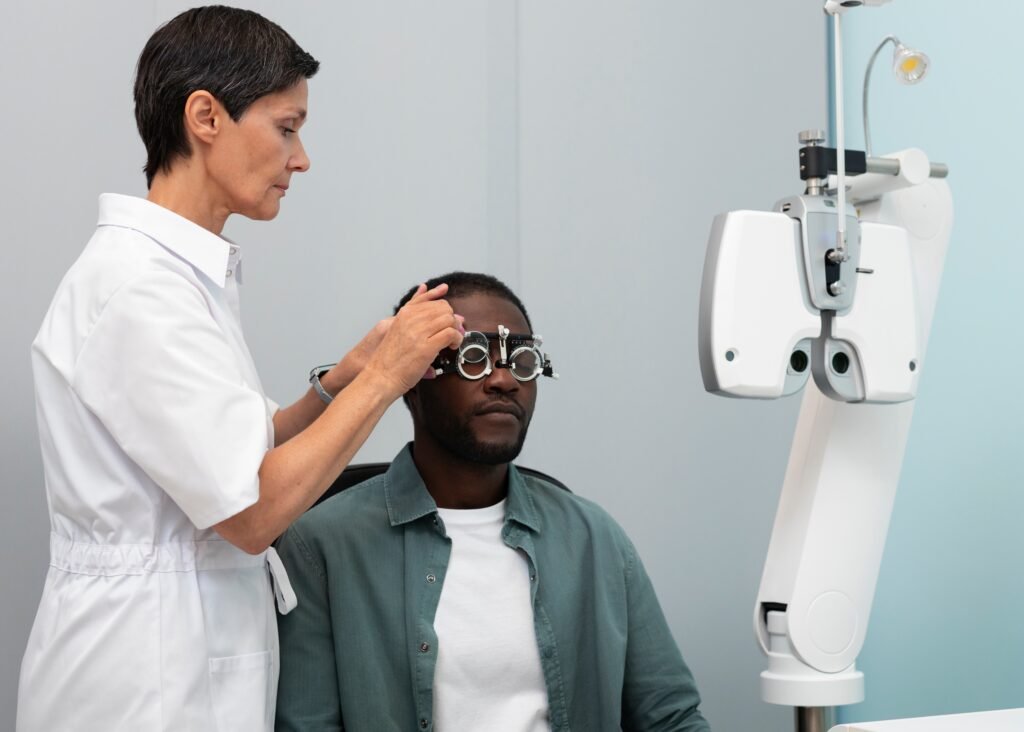
Seek urgent care if you experience sudden vision loss or significant vision changes, severe eye pain, seeing flashes of light or new floaters, persistent redness that doesn’t improve with rest, discharge that could indicate infection, or symptoms that significantly interfere with your ability to work safely.
Don’t ignore persistent problems hoping they’ll go away. Early intervention prevents permanent damage in many cases.
Long-Term Eye Health for Night Shift Workers
If you’re working nights long-term, you need a sustained strategy to protect your vision over years, not just shift by shift.
Get Annual Comprehensive Eye Exams
Don’t skip this. Night shift workers should have full eye exams including visual acuity testing, intraocular pressure measurement, and dilated retinal examination at least annually.
Tell your eye doctor you work night shift so they can assess for specific risks like early AMD or dry eye syndrome. Early detection of problems allows for intervention before irreversible damage occurs.
Track Changes in Your Vision
Keep notes about vision changes, eye symptoms, and when they occur. Are symptoms worse at certain times of night? Do they improve on days off? This information helps your doctor identify patterns and causes.
Don’t dismiss gradual changes as “just getting older” without getting them checked. Age-related changes can be accelerated by night shift work.
Consider Your Long-Term Career Plans
If you’re developing significant eye problems that don’t improve with protective measures, you may need to think about whether permanent night shift work is sustainable for your eye health.
Some people’s eyes simply can’t handle the demands of night work long-term. That’s not a personal failure. It’s a biological reality.
Prioritize Sleep Quality
Better sleep supports better eye health. Your eyes need quality sleep to repair and regenerate. Chronic sleep deprivation worsens dry eye and many other eye problems.
Focus on creating optimal sleep conditions with complete darkness, cool temperatures, and protection from interruptions. Our guide on fixing night shift sleep problems offers comprehensive strategies.
The Bottom Line: Your Eyes Are Worth Protecting
Working night shift puts real stress on your eyes through multiple mechanisms: artificial light exposure, reduced blinking, circadian disruption of tear production, prolonged close-range focus, and environmental factors.
The research is clear that night shift workers face elevated risks for dry eye syndrome, compromised visual acuity, and even conditions like macular degeneration that can cause permanent vision loss.
But you’re not helpless. The strategies in this article, consistently applied throughout your shifts and supported by regular eye care, can significantly reduce your risk of serious eye problems.
Your vision is irreplaceable. Take the time during your shift to protect your eyes. Use artificial tears before you need them. Take screen breaks even when you’re busy. See your eye doctor annually. Pay attention to warning signs.
You’re already doing something hard by working nights. Don’t let it cost you your eyesight in the process.
Ready to Protect Your Health While Working Nights?
Eye problems are just one aspect of the physical toll night shift takes. Learn how to build immunity against frequent night shift illnesses to protect your overall health.
Struggling with other physical symptoms beyond eye problems? Our guide on staying energized during night shifts offers science-backed strategies to support your body’s functioning.
Join the Nightshifters Community | Request a specific night shift guidance
Join our community of night shift workers who prioritize their health while navigating the challenges of shift work. Share your eye care strategies, learn from others’ experiences, and get support from people who understand.
Have you experienced vision problems since starting night shift? What eye care strategies work for you? Drop your experiences in the comments below and help other night shifters protect their eyesight.