
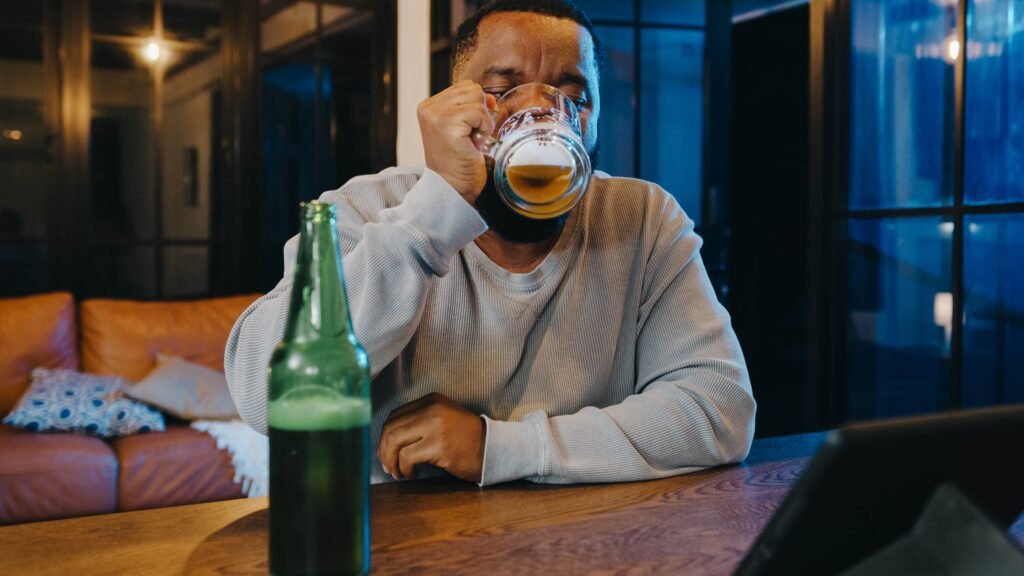
The beer tastes wrong at 8 AM. You’re sitting in your kitchen with sunlight streaming through the windows while everyone else is on their morning commute, and you’re having what your body recognizes as “after work drinks” even though the rest of the world is starting their day. One beer to take the edge off. To help you unwind. To quiet your brain so you can actually sleep.
It’s become a routine. Not every day, but most days. Enough that you’ve started wondering if it’s a problem. Enough that when you skip it, falling asleep takes twice as long and feels twice as hard.
You tell yourself it’s fine. Day workers have happy hour. This is just your version. Different timing, same concept. But somewhere deep down, you know it’s hitting you differently than alcohol used to when you worked normal hours.
If the relationship between night shift and alcohol has started feeling complicated, you’re observing something backed by extensive research. A systematic review published in the European Journal of Addiction Research found that night shift and alcohol consumption are strongly linked, with shift workers showing higher rates of binge drinking and using alcohol specifically as a sleep aid. Studies show 20-40% of shift workers suffer from sleep difficulties, and alcohol becomes a common coping mechanism that creates more problems than it solves.
This isn’t about willpower or character. It’s about biology, circadian disruption, and the unique ways night shift and alcohol interact in your body differently than they would for someone on a normal schedule.
What Research Actually Shows About Night Shift and Alcohol
Let’s start with the uncomfortable truth revealed in multiple studies examining night shift and alcohol use patterns.
Night Workers Drink More, and Differently
Research consistently shows that night shift and alcohol consumption patterns differ significantly from day workers. A comprehensive scoping review analyzing 21 studies found that 17 reported a positive and significant association between night shift and alcohol consumption.
But it’s not just that night workers drink more. It’s how and why they drink that matters.
Studies show night shift and alcohol use is characterized by:
- Higher rates of binge drinking compared to day workers
- Using alcohol specifically as a sleep aid
- Drinking at unconventional times (mornings, mid-day)
- Increased risk of developing alcohol use disorders
Research from Korean workers found that those working night shifts with poor sleep patterns had the highest risk of developing alcohol use disorder, especially when combined with long work hours.
The Numbers Are Sobering
When we look at specific populations, the connection between night shift and alcohol becomes even clearer. Nurses over age 50 represent a particularly high-risk group. Factory workers on rotating shifts show elevated binge drinking rates. Healthcare workers across specialties demonstrate higher alcohol consumption tied directly to their overnight schedules.
This isn’t a small subset. We’re talking about patterns affecting millions of workers who keep society functioning while everyone else sleeps.
Why Night Shift and Alcohol Is a Dangerous Combination
The relationship between night shift and alcohol isn’t just about quantity consumed. It’s about how alcohol affects your already-disrupted body in ways that compound the damage of working overnight.
Alcohol Destroys Already-Compromised Sleep
You might think alcohol helps you sleep after night shift. Initially, it does. Alcohol has sedative properties that reduce the time it takes to fall asleep, which feels like exactly what you need when your brain is wired at 7 AM.
But research on night shift and alcohol reveals the ugly truth: while alcohol helps you fall asleep faster, it catastrophically degrades sleep quality.
According to studies in Accident Analysis & Prevention, alcohol disrupts sleep architecture by:
- Reducing REM sleep (crucial for memory and emotional regulation)
- Increasing sleep fragmentation in the second half of your sleep period
- Suppressing deep sleep stages your body desperately needs for recovery
- Triggering rebound insomnia as alcohol metabolizes
When you combine night shift and alcohol, you’re taking an already-difficult sleep situation (trying to sleep during daylight when your circadian rhythm wants you awake) and making it exponentially worse
Your Circadian Rhythm Takes a Double Hit
Night shift alone disrupts your circadian rhythm. Alcohol alone disrupts your circadian rhythm. Combine night shift and alcohol and you create a compounding disaster.
Research published in the American Journal of Physiology found that night workers who consumed even moderate amounts of alcohol (0.5 g/kg daily for 7 days, roughly 2-3 drinks) experienced a significant 2-hour phase delay in melatonin production that day workers didn’t experience.
Your body’s master clock, already struggling to adapt to overnight work, gets pushed even further out of alignment when night shift and alcohol combine. This creates a cascade of problems: worse sleep, increased fatigue, more stress, and often more alcohol use to cope, creating a vicious cycle.
Your Gut Becomes More Vulnerable
This one surprises most people. The connection between night shift and alcohol extends to your digestive system in ways that don’t affect day workers.
The same research showed that night workers developed increased intestinal permeability (leaky gut) with alcohol consumption, while day workers didn’t show the same changes. This means the gut barrier that normally protects you from bacteria and toxins becomes compromised specifically when you combine night shift and alcohol.
Increased intestinal permeability is linked to:
- Systemic inflammation
- Increased infection risk
- Autoimmune conditions
- Liver disease progression
For night workers, alcohol doesn’t just affect your brain and sleep. It literally makes your gut more permeable to harmful substances in ways unique to circadian misalignment.
Processing Alcohol Becomes Harder
Your liver processes alcohol differently depending on your circadian timing. When night shift and alcohol use occur together, you’re asking your liver to metabolize alcohol when it’s not optimally prepared for the task.
This means alcohol might affect you more intensely, stay in your system longer, and create more pronounced hangover effects when consumed after night shift compared to evening drinking during a normal schedule. The same amount of alcohol hits different when your biological clock is completely out of sync with your behavior.
The Sleep Aid Trap: Why Night Shift and Alcohol Seems Like a Solution
Understanding why night shift and alcohol become intertwined helps explain why this pattern is so hard to break.
The Immediate Payoff Feels Real
After a brutal 12-hour night shift, you’re exhausted but wired. Your body is screaming for sleep, but your brain won’t shut off. The sun is up, which signals “daytime” to every cell in your body. Falling asleep feels impossible.
Then you have a drink. Or two. Within 20-30 minutes, the sedative effect kicks in. Your racing thoughts slow down. Your body relaxes. You finally drift off to sleep.
It worked. That’s not your imagination. Alcohol genuinely helped you fall asleep faster after night shift. The problem is what happens next.
The Delayed Consequences Get Blamed on Night Shift
Three hours later, you wake up. You’re thirsty, sweaty, and your heart is racing slightly. You struggle to fall back asleep. When you finally do, it’s light, unsatisfying sleep peppered with weird dreams. You wake up feeling like you barely slept at all.
You blame night shift. You assume this is just what post-shift sleep feels like. What you don’t realize is that the relationship between night shift and alcohol is directly responsible for the quality of your sleep being so poor.
If you’d fallen asleep without alcohol (even if it took longer), you would have slept more deeply and woken more refreshed. The trade-off of faster sleep onset for horrible sleep quality is never worth it, but the delayed consequences make the connection invisible.
Social Drinking Patterns Shift
When night shift and alcohol combine, your entire relationship with drinking changes. You’re not going out with coworkers for happy hour. You’re not having wine with dinner. You’re drinking alone, at weird times, for a specific functional purpose (sleep aid, stress reduction).
This isolation plus functional use is a recipe for problematic patterns developing without your social circle even noticing. No one sees you drinking at 8 AM because everyone else is at work. The normal social checks on alcohol consumption don’t exist for night workers.
Warning Signs the Relationship Between Night Shift and Alcohol Is Becoming a Problem
Not everyone who works nights and drinks has a problem. But certain patterns indicate that night shift and alcohol use is sliding into dangerous territory.
You Can’t Sleep Without It
If you find yourself unable to fall asleep after night shift without having a drink first, that’s a significant red flag. Your body has learned to depend on alcohol as a sleep aid, and breaking this association becomes increasingly difficult.
The Amount Has Crept Up
What started as one beer to unwind has become two or three. You find yourself drinking earlier in your post-shift routine, or reaching for stronger drinks. This tolerance build-up indicates your body is adapting to regular alcohol consumption.
You’re Drinking Every Post-Shift Day
Occasional use after particularly rough shifts is different from automatic, routine alcohol consumption after every single night of work. If drinking after night shift has become non-negotiable, you’ve crossed into habitual use.
Other People Have Mentioned It
If family members, partners, or housemates have commented on your drinking patterns, take it seriously. They’re seeing patterns you might not recognize because they’re observing from outside your exhaustion and routine.
You Feel Worse, Not Better
If the relationship between night shift and alcohol is making your overall wellbeing worse (more fatigue, worse mood, increased anxiety, digestive problems), but you keep drinking anyway, that’s a sign the behavior has become compulsive rather than helpful.
Breaking the Night Shift and Alcohol Cycle
If you’ve recognized problematic patterns in your relationship with night shift and alcohol, here’s how to change course.
Replace Alcohol with Actual Sleep Aids
The urge to drink after night shift is often an urge for sleep facilitation. Replace alcohol with evidence-based sleep strategies:
- Blackout curtains and eye masks for complete darkness
- White noise machines to block daytime sounds
- Cool room temperature (60-67°F)
- Magnesium supplements (consult your doctor first)
- Melatonin at the right timing (immediately before intended sleep)
Our comprehensive guide on how to fix night shift sleep problems offers seven evidence-based solutions that actually work without the downsides of using alcohol.
Create a Wind-Down Routine That Doesn’t Involve Drinking
Build a post-shift routine that helps you transition to sleep without alcohol:
- Take a warm shower or bath (body temperature drop afterward promotes sleep)
- Do 10-15 minutes of gentle stretching or light yoga
- Read something boring (not your phone)
- Practice simple breathing exercises (4-7-8 breath pattern)
- Listen to sleep-focused podcasts or guided relaxation
The goal is creating a reliable signal to your body that sleep is coming, replacing the alcohol cue with healthier alternatives.
Time Your Eating Strategically
What and when you eat after night shift affects your ability to fall asleep naturally. Avoid heavy meals within 2-3 hours of sleep. If you need to eat something, choose light, protein-rich snacks.
Our 12-hour night shift meal plan includes specific guidance on post-shift eating that supports better sleep without relying on alcohol.

Seek Professional Help If Needed
If you’ve tried to cut back on the connection between night shift and alcohol and found it impossible, or if you’re experiencing withdrawal symptoms (anxiety, tremors, insomnia worse than baseline), professional help isn’t optional. It’s necessary.
Talk to your doctor. Be honest about your night shift schedule and drinking patterns. Consider connecting with a therapist who specializes in substance use and understands the unique challenges of shift work.
What This Really Means: Night Shift Already Costs Enough
Here’s what nobody wants to say out loud about night shift and alcohol: working nights is already hard on your body. You’re already sacrificing sleep quality, circadian health, social connections, and potentially long-term wellbeing.
Adding alcohol to the equation takes an already-difficult situation and makes it significantly worse. The temporary relief isn’t worth the cumulative damage to your sleep, health, and risk of developing problematic drinking patterns.
You deserve better than trading one health problem (sleep difficulty) for another (alcohol dependence). You deserve strategies that actually work without creating new issues. You deserve to feel genuinely rested instead of chemically sedated.
The relationship between night shift and alcohol might feel inevitable given your circumstances, but it’s not. Thousands of night workers manage their sleep and stress without relying on alcohol. The strategies exist. The support exists. What’s required is recognizing the pattern and deciding you’re worth the effort to change it.
Your night shift schedule is hard enough without adding alcohol-related complications to the mix.
Get the Support You Need for Night Shift Challenges
Sleep problems are just one aspect of surviving night shift. Our guide on staying energized during night shifts offers science-backed strategies for maintaining alertness without relying on substances.
Struggling with the broader lifestyle impacts beyond sleep and alcohol? Our article on maintaining relationships on night shift addresses the social isolation that often drives substance use as a coping mechanism.
Join our community of night shift workers who are finding healthier ways to manage the unique challenges of overnight work. You’re not alone in this struggle.
Have you noticed changes in your relationship with alcohol since starting night shift? What strategies have helped you manage post-shift sleep without drinking? Share your experience in the comments below to help others navigating this challenge.