
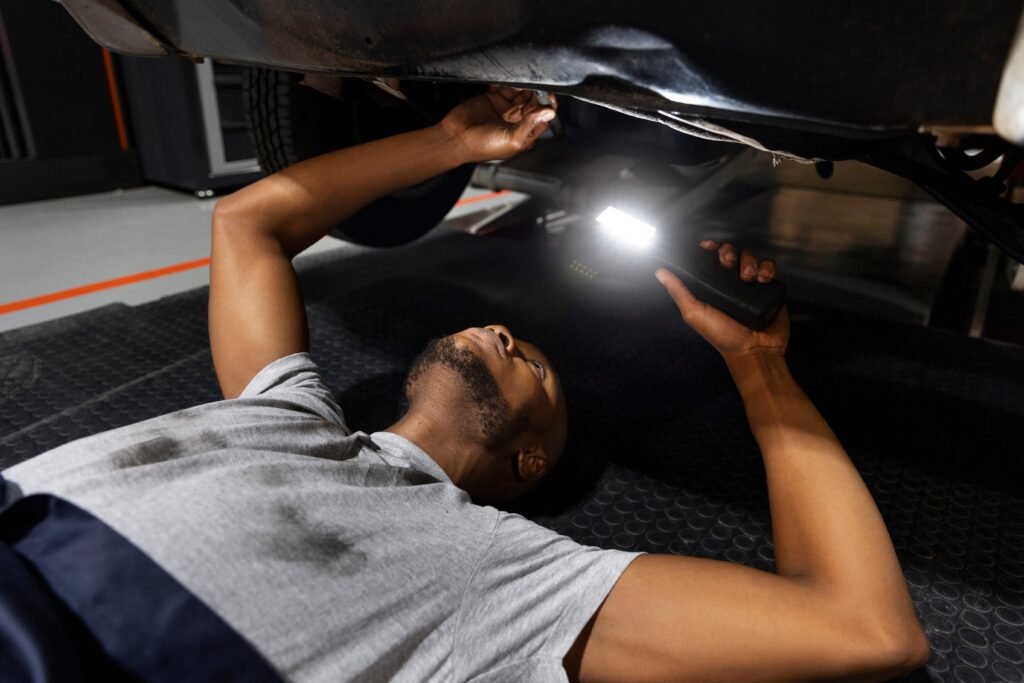
Your car didn’t sign up for night shift work, but it’s paying the price anyway.
While you’re grinding through another overnight, your vehicle is sitting in the parking lot exposed to temperature swings your day working neighbors never experience. It’s starting cold when engines are meant to be warm. It’s idling in darkness with headlights blazing for hours. It’s facing battery drain, tire pressure drops, and wear patterns that don’t show up in any standard maintenance manual.
Most mechanics will tell you to change your oil every 5,000 miles and rotate your tires every 6 months. That advice works great if you’re commuting during rush hour in moderate weather. But if you’re working nights? You’re dealing with a completely different set of stressors that standard maintenance schedules weren’t designed to handle.
Here’s what nobody tells you: fatal accidents are three times more likely at night, and vehicle issues are a major contributing factor. When your headlights are dim, your tire pressure is low from overnight cold, or your battery is struggling after hours of accessory drain, you’re not just dealing with an inconvenience. You’re dealing with a safety issue.
Your car needs night shift car maintenance specific strategies. And until you understand what’s different about driving at night, parking outdoors overnight, and operating during temperature extremes, you’ll keep getting caught off guard by problems that seem to come out of nowhere.
Why Night Shift Work Destroys Your Vehicle Differently
Before we talk solutions, let’s be honest about what your car is actually enduring when you work nights.
Your Battery is Fighting a Losing Battle
Day workers start their cars, drive to work with the alternator recharging the battery, and park in moderate conditions. You? You’re starting your car at the coldest point of the day, when battery capacity can drop by 20% at 32°F and up to 60% in extreme cold.
Then you’re driving at night with headlights, heater or AC, radio, phone charger, and possibly heated seats all pulling power simultaneously. When you park, your car sits for 12 hours in the coldest part of the 24 hour cycle. Modern vehicles have parasitic draws from computer systems and electronics that continue pulling power even when the car is off.
The result? Night shift workers deal with dead batteries far more frequently than day workers. It’s not bad luck. It’s physics.

Temperature Extremes are Wrecking Your Tires
Here’s something most people don’t know: tire pressure changes by about 1 to 2 PSI for every 10°F temperature change. If you check your tire pressure on a warm afternoon and it reads 35 PSI, that same tire could be at 31 PSI when you start your shift at midnight after the temperature dropped 40 degrees.
Underinflated tires reduce your vehicle’s handling ability, increase stopping distance, and cause uneven wear. When you’re driving at night with reduced visibility, the last thing you need is tires that aren’t responding properly.
Your tires are cold when you start driving, warm up during your commute, then sit cold for 12 hours and repeat the cycle. This constant temperature cycling stresses the rubber differently than consistent daytime use.
Your Lighting System is Working Overtime
The average day commuter uses their headlights for maybe 30 minutes to an hour daily during winter months. You’re using yours for the entire commute, potentially an hour each way, five to seven days a week.
Your headlight bulbs are burning for 10 to 14 hours per week compared to maybe 5 hours for a typical day worker. Dirty or oxidized headlight lenses reduce visibility dramatically, and this problem compounds when you’re driving in darkness. A day worker might not notice their headlights are operating at 70% brightness. You’ll notice immediately because you can’t see the road.
The Night Shift Car Maintenance Schedule That Actually Works
Standard maintenance advice doesn’t cut it when you’re working nights. Here’s what you actually need to do to keep your vehicle safe and reliable.
Priority 1: Battery Maintenance (Your Biggest Vulnerability)
Your battery is your weakest link when working nights. Here’s how to protect it:
Test your battery voltage monthly: A healthy battery should read 12.6 volts or higher when the engine is off. Anything below 12.4 volts means it’s not fully charged. Below 12 volts means it’s in danger of failing.
Clean battery terminals every three months: Corrosion builds up faster in cold, damp conditions. Clean terminals with a wire brush and apply anti-corrosion spray or petroleum jelly.
Consider a battery tender for extreme cold: If you’re parking outdoors in temperatures regularly below 20°F, a battery tender can maintain charge during your 12-hour shifts. Many night shift workers keep one in their trunk and plug in when they park.
Replace your battery proactively: Don’t wait for it to die. If your battery is more than three years old and you work nights in cold climates, replace it before winter. The $150 for a new battery is cheaper than a tow truck call at 3 AM.
Priority 2: Tire Pressure Checks (Weekly, Not Monthly)
Forget the monthly tire pressure check advice. When you’re working nights and dealing with night shift car maintenance, you need to check weekly.
Check tire pressure when cold: This means before you’ve driven anywhere, ideally first thing when you wake up before your shift. Temperature affects readings, so checking at the same time of day gives you consistent baseline data.
Add 1 to 2 PSI in winter: If you’re parking outside and temperatures drop significantly during your shift, consider setting your tire pressure 1 to 2 PSI above the recommended level to compensate for the drop that will occur overnight.
Inspect tread depth monthly: Night driving requires maximum traction. Use the penny test: insert a penny into your tire tread with Lincoln’s head upside down. If you can see the top of his head, your tread is too shallow and the tires need replacing.
Priority 3: Lighting System Inspection (Monthly)
Your lights are literally your lifeline when working nights. Treat them accordingly.
Check all lights monthly: Walk around your car before your shift starts. Check headlights (both low and high beam), brake lights, turn signals, reverse lights, and license plate lights.
Clean headlight lenses every two weeks: Use a microfiber cloth and glass cleaner. Removing dirt, dead bugs, and road film can improve visibility by 20 to 30%.
Replace bulbs in pairs: When one headlight bulb burns out, replace both. They age at the same rate, and the second one will likely fail soon anyway.
Polish oxidized headlight lenses: If your headlights look cloudy or yellowed, use a headlight restoration kit. This typically costs $20 to $30 and can dramatically improve light output.
Priority 4: Windshield and Wiper Maintenance
Your ability to see is non-negotiable when driving at night.
Replace wiper blades twice yearly: If you live in an area with winter weather, replace them in fall and spring. Cold temperatures make rubber brittle, reducing effectiveness.
Repair windshield chips immediately: A chip that would stay stable in moderate temperatures will spread quickly when you’re constantly transitioning between freezing exterior and heated interior. Get chips repaired before they become cracks.
Use rain repellent treatment: Products like Rain-X create a hydrophobic coating that helps water sheet off your windshield. This dramatically improves visibility in rain.

Priority 5: Emergency Kit Essentials (Not Optional)
Day workers might get away with minimal emergency preparedness. You can’t afford to when managing night shift car maintenance challenges.
Always carry in your vehicle:
- Flashlight with fresh batteries (check monthly)
- Warm blanket (in cold climates)
- Ice scraper and snow brush (winter)
- Portable jump starter or jumper cables
- Basic tool kit
- First aid kit
- High-visibility vest or reflective triangle
- Portable phone charger
- Bottle of water and non-perishable snacks
If you break down at 3 AM in a dark area, help might take an hour or more to arrive. Being prepared isn’t paranoid. It’s smart.
Night Shift Driving Habits That Preserve Your Vehicle
Maintenance is only half the equation. How you drive and operate your vehicle matters just as much.
Don’t idle to warm up: Modern fuel-injected engines don’t need more than 30 seconds of idling to warm up, even in cold weather. Start your car, clear snow/ice from windows, and then drive gently for the first mile or two.
Use your parking brake: When it’s cold, brake components can freeze or stick if you only use the parking pawl. Using your parking brake regularly keeps the mechanism working properly.
Park strategically: When possible, park your car facing east so the morning sun can help warm it before you start it for your evening commute. In summer, park in shade to keep the interior cooler.
Clean your car regularly: Salt, road grime, and dirt accumulate faster when driving at night in winter conditions. Learn about how weather affects your vehicle to understand what conditions create the most damage.
When Night Shift Problems Mean It’s Time for the Mechanic
Some issues are DIY fixable. Others need professional attention. Here’s when to stop trying to handle it yourself.
Get professional help if:
Your battery keeps dying despite being less than two years old (could indicate alternator or parasitic drain issues).
Your headlights are dim even after replacing bulbs and cleaning lenses (could be alternator or wiring issues).
You’re getting frequent tire pressure warnings despite filling tires (could indicate a leak or faulty TPMS sensor).
Your engine struggles to start in cold weather even with a new battery (could be starter, fuel system, or ignition issues).
You notice unusual wear patterns on tires despite regular rotation (could indicate alignment or suspension problems).
Find a mechanic who understands night shift vehicle stress: When you explain your maintenance needs, mention that you work nights and park outdoors. A good mechanic will understand this creates different wear patterns than typical daily drivers.

The Brutal Truth About Night Shift and Vehicle Longevity
Let’s address something most people won’t say out loud: working nights is genuinely harder on your vehicle than day shift work.
The constant cold starts, temperature cycling, extended lighting use, and parking in temperature extremes create accelerated wear. If a typical commuter car lasts 200,000 miles with standard maintenance, a night shift worker’s car might need more frequent part replacements and could experience problems sooner.
This doesn’t mean your car is doomed. It means you need to be more proactive about night shift car maintenance than your day working friends. The strategies in this guide help level the playing field, but you’re fighting physics.
If you’re driving an older vehicle with existing issues, night shift work will accelerate its decline. If you’re constantly spending money on repairs, it might be time to consider whether upgrading to a more reliable vehicle would actually save you money in the long run.
Your Vehicle Safety Action Plan
You don’t have to implement everything tomorrow. Start with the highest priority items.
This week: Check your battery voltage and tire pressure. Clean your headlights. Make sure your emergency kit has working flashlight batteries.
This month: Inspect all lights. Test your windshield wipers. Check all fluid levels. Clean your battery terminals.
This season: Replace wiper blades. Have your battery tested professionally if it’s more than two years old. Consider headlight restoration if lenses are cloudy.
This year: Establish a relationship with a trustworthy mechanic who understands your night shift vehicle needs.
You’re Not Being Paranoid About Your Car
If you feel like your vehicle requires more attention than your day working friends’ cars, you’re not imagining things. The science backs you up.
Driving at night is statistically more dangerous than daytime driving, and vehicle issues are a contributing factor. When your headlights are dim, your tires are underinflated from cold, or your battery is weak, you’re not just dealing with an inconvenience. You’re dealing with a safety issue that could leave you stranded or worse.
Taking care of your vehicle when you work nights isn’t about being obsessive. It’s about recognizing that your car is operating under different conditions than most vehicles, and adjusting your night shift car maintenance accordingly.
Your car is your lifeline to work, your safety during night commutes, and your way home when you’re exhausted. It deserves the same level of care and attention you’d give any other critical tool in your life.
The night shift is hard enough without worrying whether your car will start after a 12 hour shift. Put these maintenance strategies into practice, and you’ll spend less time dealing with breakdowns and more time getting safely to and from work.
Share Your Experience
Join the Nightshifters Community | Request a specific night shift guidance
What car maintenance challenges have you faced as a night shift worker? What tricks have helped keep your vehicle reliable? Drop your experience in the comments. Other night shifters need to hear what actually works in real conditions.