
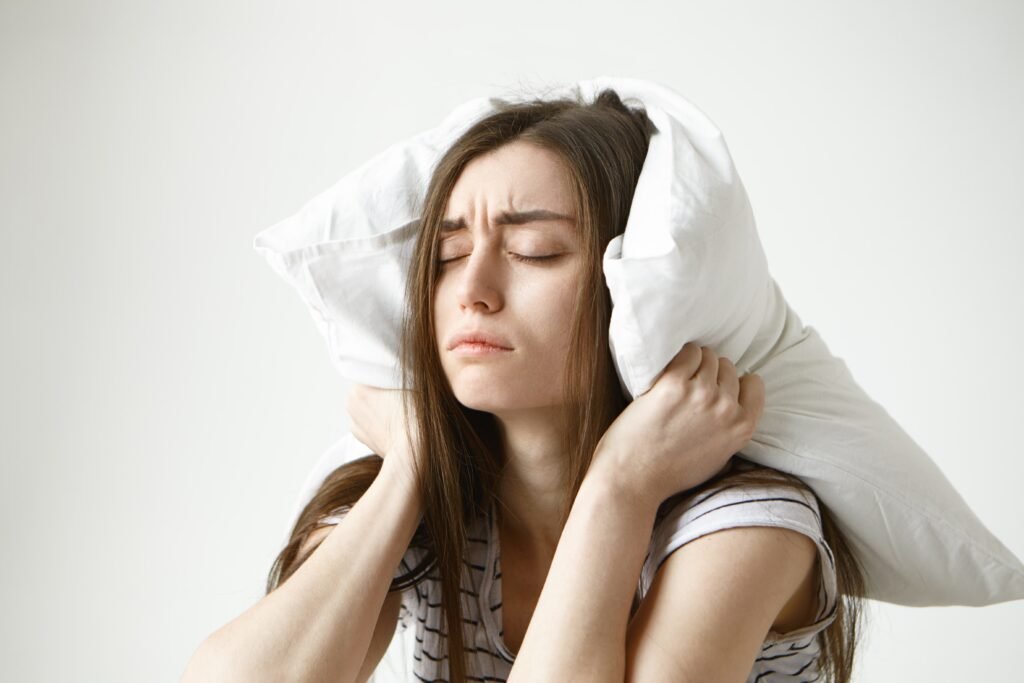
At some point on a night shift, usually somewhere between 2 and 4 AM, every overnight worker has the same experience. It is not exactly tiredness. Tiredness is manageable. This is something more specific: a heaviness that arrives in the eyes first, then spreads into the hands, the thoughts, the ability to care about anything. The room gets slightly unreal. Simple tasks take noticeably longer. You know you are not asleep but you are not entirely sure you are awake either.
That experience has a name. Researchers call it the circadian nadir, the lowest point in the body’s daily alertness cycle, and it arrives between 2 and 5 AM for most people regardless of how much sleep they got before the shift. Your circadian system is doing exactly what it was built to do. No amount of willpower changes the mechanism. What changes is how well you manage it.
Why Does Staying Awake on Night Shift Feel Harder Than It Should?
Knowing how to stay awake on night shift starts with understanding two forces working against you simultaneously. Together they make fatigue worse than either would alone.
The first is the circadian alerting signal, the biological rhythm that generates wakefulness during daylight hours and sleep pressure at night. For night shift workers this system is inverted, pushing maximum sleep pressure into working hours. A Scientific Reports study examining alertness and performance in 52 intensive care workers across day and night shifts found that subjective sleepiness and reaction time impairment were highest at the end of the first night shift, coinciding with the circadian nadir and a time associated with increased risk of accidents and errors. The first night of a run is typically the hardest because workers begin it with prolonged prior wakefulness that compounds the circadian effect before the shift has even started.
The second force is homeostatic sleep pressure, the biological drive to sleep that builds with every hour of wakefulness. Research confirms that cognitive performance after 24 hours without sleep is equivalent to working with a blood alcohol level of 0.10. That single statistic makes the common practice of staying awake all day before a first night shift one of the most counterproductive things an overnight worker can do. You arrive already impaired before anyone knows the shift has begun.
Both forces respond to specific evidence-based interventions. Not equally, not completely, but meaningfully enough to make the difference between a shift you manage and one that manages you.
How to Stay Awake on Night Shift Before You Even Get There: The Pre-Shift Protocol
How to stay awake on night shift is a question most workers try to answer at 3 AM when they are already in the worst of it. The workers who stay sharpest during overnights answer it before they leave the house.
Sleep timing in the hours before a shift is the most controllable alertness variable available. The goal is to arrive at work with as little prior wakefulness as possible. A 2024 intervention protocol published in BMC Public Health advises shift workers to wake up close to the start of their night shift, with a planned afternoon or early evening nap of 90 minutes providing the most meaningful alertness buffer. A nap ending at least two hours before your shift starts clears the grogginess of waking while keeping sleep pressure lower than it would be without it.
A 2025 systematic review of night shift strategies for medical trainees confirmed that a planned pre-shift nap helps align the body’s natural circadian rhythm and serves as a proactive buffer against sleep debt, with its restorative benefits extending into the following day. Duration matters here specifically. Under 20 minutes keeps you in light sleep stages and avoids sleep inertia on waking. Ninety minutes allows a full sleep cycle. Anything between 20 and 90 minutes risks waking from deep sleep, which produces a grogginess that takes up to 30 minutes to clear and can compromise the first hours of your shift.
Light exposure before your shift is the other pre-shift alertness tool with direct research support. Bright light in the two hours before you leave for work advances the circadian alerting signal, helping your body begin its wakefulness phase earlier than it would naturally. For the full breakdown of how to use light strategically around your shift schedule, the guide to light therapy for night shift workers covers the research and practical protocol in detail.
How to Stay Awake on Night Shift Using Light During Your Shift
Of all the environmental interventions for how to stay awake on night shift, light is the most powerful and the most underused. The circadian system reads light as the primary wakefulness signal, and the intensity and spectrum of that light determines how strongly it suppresses melatonin and maintains alertness.
A 2025 systematic review of 74 studies examining interventions for night shift healthcare workers, published in Cureus, found that bright and blue-enriched light was among the most consistently effective interventions for boosting alertness during overnight work. The research-supported recommendation is lighting of at least 1000 lux during the first half of a night shift, with warmer, lower-intensity light in the second half as the shift winds down.
If your workplace does not provide adequate lighting, a portable light therapy lamp at your workstation delivers the same circadian benefit. Timing matters as much as intensity. Using bright light throughout the entire shift, including the final hours before you leave, will suppress melatonin so aggressively that post-shift sleep becomes significantly harder. Front-load the light to the first half. Let the second half prepare your body for what comes after.
The Caffeine Strategy That Actually Keeps You Awake on Night Shift
Caffeine works. The problem is not whether it works. The problem is when night shift workers use it.
Caffeine blocks adenosine receptors in the brain. Adenosine is the molecule that accumulates during wakefulness and drives sleep pressure, so blocking it produces real, measurable alertness. But caffeine has a half-life of approximately five to six hours, meaning half of what you consume at 5 AM is still active in your system at 11 AM when you are trying to sleep. The CDC’s National Institute for Occupational Safety and Health recommends stopping caffeine intake at least six hours before intended sleep time. Most night shift workers violate this regularly without realising it is why their post-shift sleep feels impossible.
The research-supported approach for how to stay awake on night shift using caffeine is front-loading rather than reactive dosing. Take 100 to 200 milligrams, roughly one to two cups of coffee, 30 minutes before the shift begins when the alerting benefit is most needed against rising sleep pressure. A second dose in the first third of the shift maintains the effect through the early hours. After the midpoint, stop. This requires planning rather than impulse, but it delivers better alertness across the full shift without sacrificing post-shift sleep.
The caffeine-nap combination is the most evidence-backed tool in this entire article and the one most workers have never tried. Drink 150 to 200 milligrams of caffeine immediately before a 20-minute nap. Caffeine takes approximately 20 to 30 minutes to cross the blood-brain barrier, so it arrives precisely as the nap ends, blocking the adenosine that built up before you closed your eyes while the nap itself clears the grogginess that would otherwise follow. The combined alertness effect is greater than either caffeine or a nap produces alone, and for workers with access to break facilities it is one of the most effective ways to stay awake on night shift through the back half of a long overnight.

How In-Shift Napping Keeps You Alert Through a Night Shift
If there is one intervention that consistently outperforms every other strategy in the research on how to stay awake on night shift, it is the in-shift nap. The evidence is not ambiguous. The 2025 Cureus systematic review of 74 studies found that scheduled napping was among the most consistently effective interventions across all measures of alertness, cognitive performance, and mood in night shift healthcare workers, with longer naps associated with superior outcomes when sleep inertia was managed correctly.
A nap of 20 to 26 minutes taken during the first half of the shift produces alertness benefits that extend through the back half without generating significant sleep inertia on waking. A longer nap of 45 to 90 minutes produces greater cognitive benefit but requires 15 to 30 minutes of recovery time before the worker returns to full performance.
One timing rule that matters more than most workers realise: neither duration is useful in the final two to three hours of a shift. The sleep pressure a nap clears is the same pressure that will drive post-shift sleep onset. Napping too late in the shift makes going home to sleep harder, not easier.
The full evidence base on nap duration, timing, sleep inertia management, and the NASA 26-minute nap research is covered in the guide to napping on night shift.
How Physical Movement Helps You Stay Awake on Night Shift
Movement is not the first tool most workers reach for at 3 AM, but the research justifies it more strongly than most realise. A 2025 randomised controlled trial published in Chronobiology International, examining 33 adults across five consecutive simulated night shifts, found that breaking up sitting with light-intensity physical activity during overnight work significantly improved cognitive performance compared to remaining sedentary.
Physical movement increases cerebral blood flow, raises core body temperature slightly, and triggers a brief release of norepinephrine and dopamine, all of which counteract alertness suppression during the circadian nadir. The intensity does not need to be high. A five-minute walk, a set of standing stretches, or brief stair climbing produces measurable improvements in subsequent alertness that persist for 20 to 30 minutes. A 2025 systematic review of exercise interventions for shift workers published in PMC confirmed that in-shift activity breaks improved cognitive outcomes in occupational settings.
For workers in clinical or high-supervision environments where leaving a station is not always possible, desk-based movement still helps. Ankle rotations, shoulder rolls, standing at intervals, anything that interrupts continuous sitting. The goal is not exercise. It is circulation, and even minimal movement achieves enough of it to matter during the hours when alertness is most compromised.
What to Eat and Drink to Stay Awake on Night Shift
Food choices during a shift affect how to stay awake on night shift in ways most workers do not connect until they notice the pattern. Large, high-fat, high-carbohydrate meals during overnight hours spike blood sugar and trigger the insulin response that drives the post-meal energy crash, landing directly on top of the circadian nadir and compounding an effect that is already significant on its own.
Research-backed nutritional guidance recommends consuming approximately 20 percent of total daily calories during the overnight shift, distributed as a light meal and a small snack rather than one large intake. Protein-forward, lower glycaemic index food choices produce steadier energy without the crash. The remaining calories belong in the pre-shift meal and post-shift breakfast, where the body’s metabolic processes are better calibrated to handle them. For the complete chrononutrition framework, the guide to eating on night shift covers the research in detail.
Hydration is the alertness variable that receives the least attention and produces some of the most immediate results when corrected. Even mild dehydration reduces cognitive performance measurably, and its symptoms, headache, fatigue, difficulty concentrating, are indistinguishable from ordinary night shift tiredness. Before reaching for a fourth coffee, drink a full glass of water. The effect is not dramatic but it is real, and it arrives faster than caffeine does.
How to Stay Awake on Night Shift: Putting the Protocol Together
No single strategy fully answers how to stay awake on night shift. The workers who manage overnight fatigue most effectively are not the ones using one tool aggressively. They are the ones running a coordinated protocol that addresses the circadian, homeostatic, and environmental dimensions of overnight fatigue simultaneously.
Sleep as late as possible before a night shift rather than staying awake all day. Take a 90-minute pre-shift nap ending at least two hours before you leave for work. Use bright light during the first half of your shift and reduce it in the second. Take caffeine at shift start and the first third of the shift, stopping by the midpoint. Consider a caffeine-nap during your break if your facility allows it. Move your body for five minutes every hour rather than sitting continuously through the circadian nadir. Eat small and protein-forward during overnight hours. Drink water before coffee when fatigue spikes.
The difference between the workers who end a night shift still functional and the ones who are counting ceiling tiles at 5 AM is rarely genetics or some innate tolerance for overnights. It is whether they built a system or left it to chance.
What is the one thing that makes the biggest difference for your overnight alertness? Share it in the comments.
Pingback: Night Shift Safety Tips: How to Protect Yourself Working Alone Overnight | 2026
Pingback: Night Shift and Occupational Accidents: Why the Overnight Hours Are the Most Dangerous | 2026
Pingback: Night Shift and Team Bonding: The Paradox Overnight Workers Live Every Shift | 2026
Pingback: Working Night Shift and a Second Job: What (brutal truth) the Research Says Before You Try It | 2026