
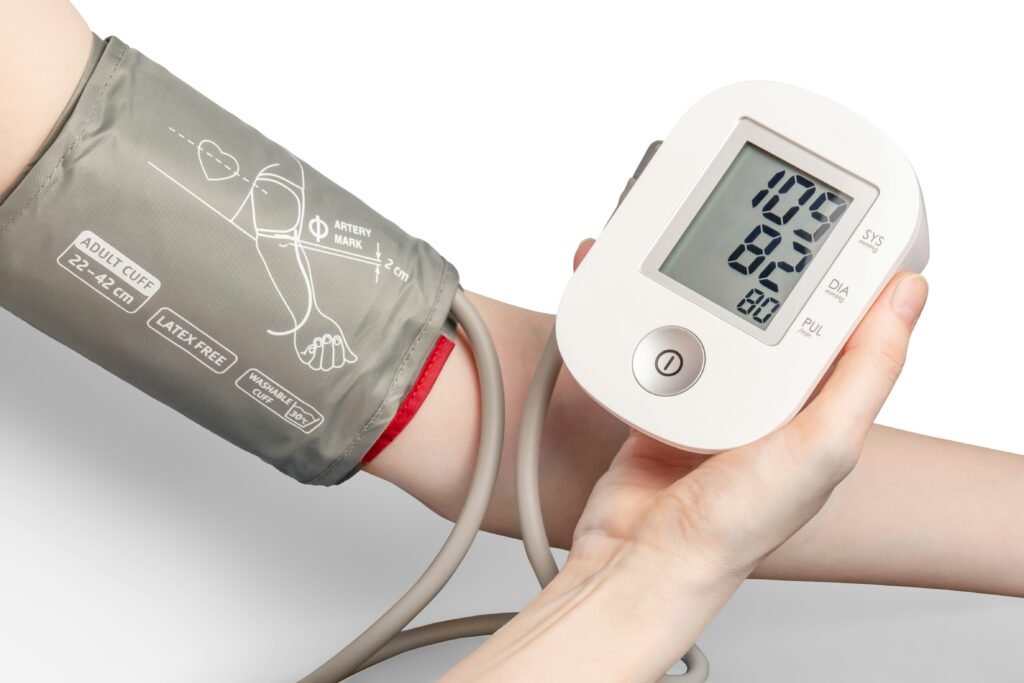
Your blood pressure is supposed to fall while you sleep. Not by much. Ten to twenty percent. A quiet, automatic drop that happens every night in healthy adults, giving the heart a few hours of reduced load, letting the arteries rest, resetting the vascular system for the day ahead. Cardiologists call it nocturnal dipping. It is one of the body’s most reliable maintenance cycles.
Night shift workers frequently lose it entirely. Not dramatically. Not in a way that sets off alarms or shows up immediately on a routine reading. The night shift and high blood pressure connection builds quietly, across months and years, through a mechanism most overnight workers have never heard of and most annual health checks are not designed to catch. Understanding it is not optional. It is how you stay ahead of a risk that is already accumulating.
What Is the Connection Between Night Shift and High Blood Pressure?
The night shift and high blood pressure relationship is built on one central disruption: what happens when the body’s blood pressure rhythm and its sleep timing no longer align.
Blood pressure follows a circadian pattern, rising upon waking and dipping by 10 to 20 percent during sleep. For day workers, sleep and darkness coincide, and the dip occurs naturally during nocturnal hours. For night shift workers, sleep happens during the day while the biological clock is still signaling wakefulness. Research published in medRxiv tracking 72 healthcare shift workers found that after three consecutive night shifts, morning systolic blood pressure was elevated, plasma cortisol was reduced, and the 24-hour heart rate rhythm was perturbed, with nocturnal blood pressure dipping blunted and recovery delayed post-shift.
The 2025 blunted dipping review published in the American Journal of Industrial Medicine by researchers at the University of Pittsburgh is the most comprehensive examination of this mechanism to date. It found that blunted blood pressure dipping is a physiological response detectable immediately upon exposure to night shift work and precedes a cascade of biological responses that culminate in cardiovascular disease. The key phrase is immediately. This is not a risk that takes years to begin. It starts on the first overnight shift and compounds from there.
The mechanism runs through the autonomic nervous system. When blood pressure fails to dip normally across a 24-hour period, it is accompanied by increased sympathetic activity, the fight-or-flight branch of the nervous system, and reduced parasympathetic activity, the rest-and-recover branch. Night shift work keeps the sympathetic system engaged at the biological hours when it should be standing down. Over time that persistent activation damages the vascular endothelium, reduces arterial elasticity, and drives the sustained blood pressure elevation that defines hypertension.
How Much Does Night Shift Work Actually Raise Blood Pressure?
The numbers from the 2025 research are specific enough to take seriously. A prospective cross-sectional study published in the Journal of Population Therapeutics and Clinical Pharmacology in 2025, tracking 150 healthcare professionals across shifts, found that night shifts were associated with the most pronounced blood pressure elevations of any shift type, with end-of-shift readings averaging 138.7/88.3 mmHg compared to 130.1/83.7 mmHg for morning shifts. Under the 2025 AHA/ACC guidelines, a reading of 138.7/88.3 mmHg sits firmly in the stage one hypertension range. Workers finishing night shifts are regularly crossing into clinical hypertension territory by the end of their shift.
Rotating shift workers face an additional layer of risk. The same study found that rotating shift workers exhibited significantly higher rates of non-dipping and reverse dipping patterns at 59.6 percent compared to 39.1 percent in fixed-schedule workers. Reverse dipping, where blood pressure rises rather than falls during sleep, is the most concerning pattern clinically and carries the highest long-term cardiovascular risk. Rotating schedules produce it at nearly double the rate of fixed ones.
A 2025 crossover study published in Physiological Reports confirmed the acute dimension of the night shift and high blood pressure problem. Researchers found that acute night shift work was associated with significantly increased blood pressure and reduced sleep duration even in healthy young adults with no pre-existing cardiovascular conditions. This is not a risk that requires years of cumulative exposure to begin registering. A single overnight shift measurably elevates blood pressure in people who had no hypertension risk before they started.
Why Does Night Shift and High Blood Pressure Often Go Undetected?
This is where the night shift and high blood pressure problem becomes particularly dangerous. Standard blood pressure monitoring, whether at a GP appointment or an occupational health check, typically captures a single daytime reading taken when the worker is off shift and rested. That reading frequently looks normal.
What it misses is the nocturnal pattern. A night shift worker whose daytime readings are 120/80 mmHg may be experiencing end-of-shift readings of 138/88 and spending significant hours each day in non-dipping or reverse-dipping territory. Standard single-point monitoring cannot see any of that. The University of Pittsburgh review explicitly identifies standard blood pressure monitoring as inadequate for night shift workers and recommends ambulatory blood pressure monitoring, which captures readings across a full 24-hour period including work hours and sleep periods, as the appropriate assessment tool for this population.
If you are a night shift worker who has never had a 24-hour ambulatory blood pressure monitor fitted, that conversation with your GP or occupational health provider is worth having regardless of what your last routine reading showed.
What Does Night Shift and High Blood Pressure Mean for Your Long-Term Health?
Sustained hypertension is the leading modifiable risk factor for cardiovascular disease, stroke, chronic kidney disease, and premature mortality globally. For night shift workers, the night shift and high blood pressure connection means these risks are accumulating at an accelerated rate through a mechanism that standard health monitoring frequently misses.
Research has consistently shown that night shift workers face a 40 percent higher cardiovascular disease risk compared to day workers, and hypertension is a primary driver of that excess risk. A 2025 industrial cohort study found that the majority of hypertensive cases were observed in workers aged 35 to 55, and that duration of night shift employment beyond five years was strongly associated with hypertension development. The longer the exposure, the more embedded the vascular damage becomes.
The night shift and high blood pressure risk is also compounded by other factors that overnight schedules produce simultaneously. Poor sleep quality, elevated cortisol from circadian disruption, weight gain from metabolic changes, and reduced opportunities for regular exercise all contribute independently to blood pressure elevation and interact with the blunted dipping mechanism to create a risk profile significantly larger than any single factor would produce alone.
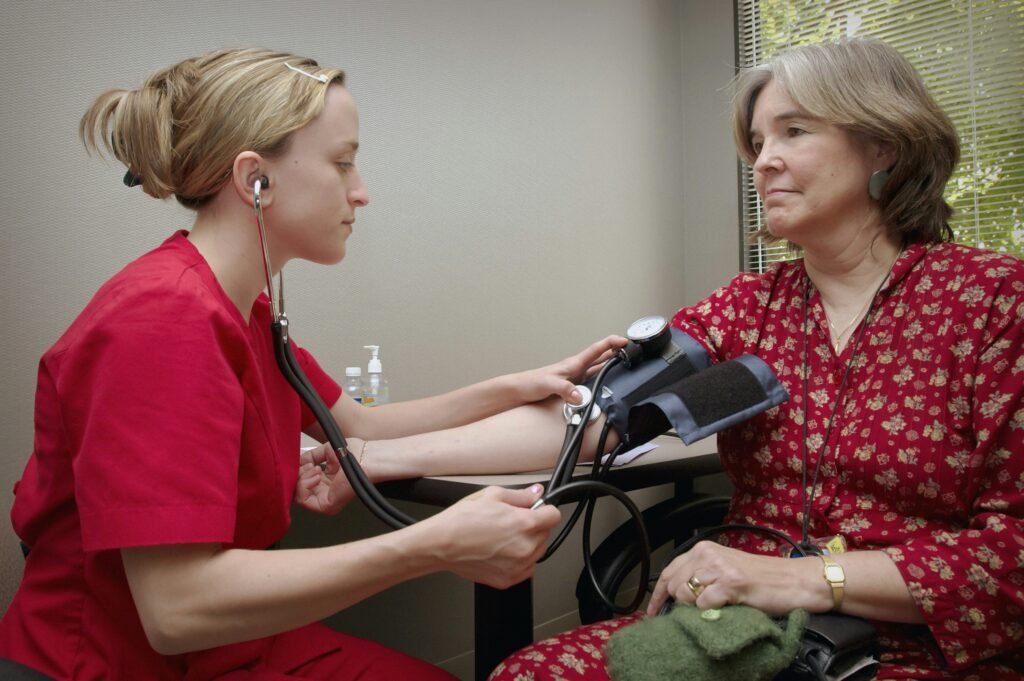
What Can Night Shift Workers Do to Protect Themselves From High Blood Pressure?
The night shift and high blood pressure problem is real, well-evidenced, and manageable. None of the interventions require leaving the profession. They require treating blood pressure management as a non-negotiable part of working an overnight schedule.
Monitor properly
The first intervention is getting the right data. Ask your GP for a 24-hour ambulatory blood pressure monitor rather than relying on single-point clinic readings. Know what your end-of-shift readings look like, not just your rested daytime numbers. If your workplace offers occupational health services, use them specifically to discuss cardiovascular monitoring in the context of your shift schedule.
Address sleep quality directly
The blunted dipping mechanism operates through sleep timing and quality. Every improvement to daytime sleep quality is simultaneously a cardiovascular intervention. Blackout curtains, white noise, blue-blocking glasses on the commute home, and consistent sleep anchor times are not comfort choices for night shift workers. They are blood pressure management tools. For the complete evidence-based sleep protocol, the guide to how to fall asleep after night shift covers the research and practical steps in full.
Apply the DASH diet principles to your shift eating
The DASH diet, endorsed by the 2025 AHA/ACC hypertension guidelines as the most evidence-based dietary intervention for blood pressure management, is particularly relevant for night shift workers whose eating patterns during overnight hours tend toward high-sodium, high-glycaemic convenience food. The NIH confirmed in 2025 that adults following DASH can lower blood pressure within weeks without altering sodium intake, with even greater reductions when sodium is reduced from 3,450 mg to 2,300 mg per day or below.
Practically for night shift workers: pack meals built around whole grains, lean protein, vegetables, and low-fat dairy rather than depending on vending machines or fast food at 3 AM. Reduce sodium in the foods you bring to work. Increase potassium through fruits, vegetables, and legumes. These changes apply to the chrono-nutrition principles covered in the guide to eating on night shift and work alongside sleep improvements rather than separately from them.
Build regular aerobic exercise into your schedule
Regular aerobic exercise reduces systolic blood pressure by an average of 8.3 mmHg and diastolic by 5.2 mmHg, making it one of the most powerful non-pharmacological blood pressure interventions available. For night shift workers, timing matters. Exercise immediately before a night shift can temporarily elevate blood pressure and interfere with shift-start alertness. Exercise on days off or in the hours after waking before an evening shift is generally better tolerated and more consistent with the circadian biology of the night shift body.
Know when medication is the right conversation
Lifestyle interventions are effective and evidence-based. They are also not always sufficient, particularly for workers with established hypertension, significant family history, or multiple compounding risk factors. If your blood pressure readings are consistently above 130/80 mmHg, a conversation with your GP about medication is appropriate rather than something to defer. The 2025 AHA/ACC guidelines are explicit that pharmacological treatment alongside lifestyle modification is indicated at this threshold. Managing night shift and high blood pressure is not about choosing between lifestyle changes and medication. For many workers, it requires both.
Night shift and high blood pressure is not an inevitable consequence of working overnights. It is a specific, well-understood biological risk with specific, well-evidenced responses. The workers who stay ahead of it are not the ones with the best cardiovascular genetics. They are the ones who understood what their schedule was doing to their vascular system and decided to take it seriously before a clinic reading made the decision for them.
Have you ever had your blood pressure checked specifically at the end of a night shift? Share what you found in the comments.
Pingback: Night Shift and Smoking: Why Overnight Workers Smoke More and Quitting Is Harder | 2026