
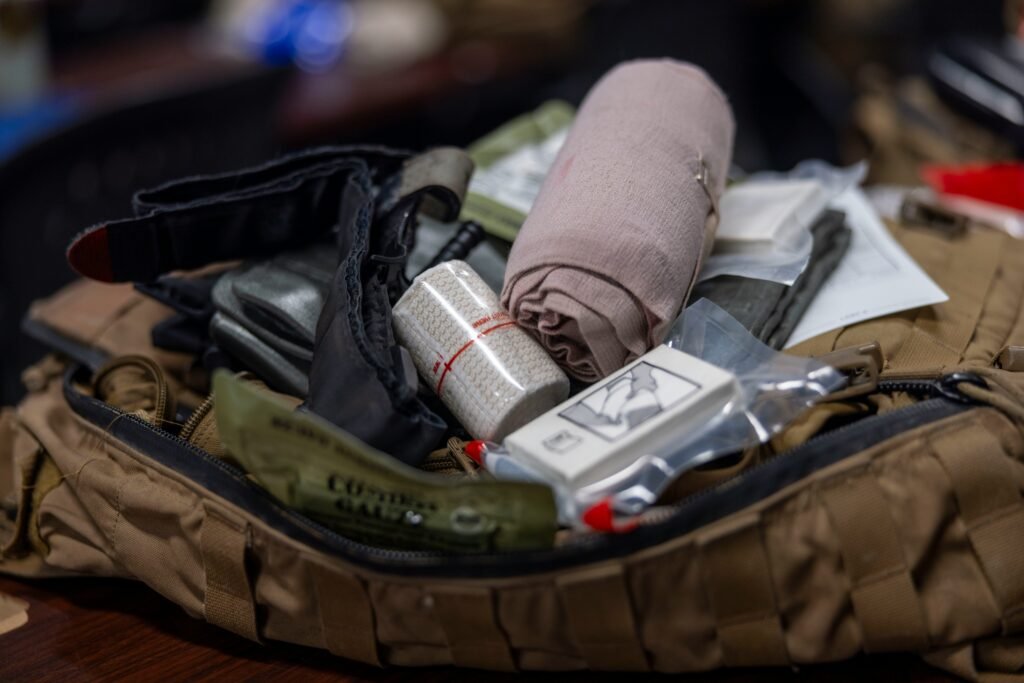
Nobody hands you a manual when you start nights. You figure it out the hard way: dragging yourself home at 7 AM squinting into morning light that feels like an assault, eating whatever was still available at 3 AM because you forgot to pack food, sleeping with street noise bleeding through thin curtains while the rest of the world mows lawns and runs deliveries outside your window. Most night shift workers spend months, sometimes years, assembling a system through trial and error. This is the shortcut they deserved on day one. This is your night shift survival kit, built from the research up.
A proper night shift survival kit is not a bag of random products. It is a deliberate setup across the four areas that determine whether overnight work breaks you down or stays manageable: sleep, light, food, and energy. Get these four areas right and almost everything else follows.
What Goes Into a Night Shift Survival Kit?
The phrase “survival kit” gets used loosely. On forums and TikTok, it usually means whatever snacks someone threw in a bag before their shift. That is not what this is.
A real night shift survival kit addresses the biological reality of your situation. Your body runs on a circadian clock calibrated to a world that is active during daylight and asleep after dark. Night shift work runs directly against that clock, and the consequences are well documented. Research published in the Journal of Clinical Sleep Medicine found that chronic night shift workers face a 30 to 40 percent higher risk of cardiovascular disease, metabolic disorders, and depression compared to day workers. That is not a reason to panic. It is a reason to build your kit properly.
Every item in this night shift survival kit is organized by function, not by cost or convenience. Some cost nothing. Some are worth every penny. All of them are backed by research, not guesswork.
How Does Your Night Shift Survival Kit Fix Your Sleep?
Blackout curtains or a dedicated blackout solution
This is the single most important item in the night shift survival kit, and it is the one most people underestimate. A 2024 NIH-backed study published in Sleep tracked 47,765 women and found that indoor light exposure at night was linked to poor sleep across multiple dimensions. The problem is that standard curtains, even dark ones, leave measurable light gaps at the edges that allow 10 to 50 lux of light into a bedroom. Research consistently shows that even low-level light during sleep suppresses melatonin, raises heart rate, and increases insulin resistance.
Blackout curtains work, but only when they achieve complete darkness, not just partial darkness. Look for triple-weave fabric or pair curtains with a separate blackout liner. A sleep mask is a solid backup for travel or when curtains fall short, particularly one contoured enough to block light without pressing against your eyes.
A sound solution that actually works
The world outside does not go quiet because you need to sleep. Dogs bark. Delivery trucks reverse. Neighbours have conversations at noon that feel like midnight to your nervous system.
A 2025 meta-analysis of 12 randomised controlled trials involving 1,301 participants confirmed that white noise significantly improves sleep quality across age groups. The mechanism is straightforward: white noise raises the background sound floor and reduces the contrast of sudden noise spikes, which are what jolt you awake. If it works in an intensive care unit surrounded by monitor alarms and staff activity, it can work in your bedroom.
One important caveat: keep the volume moderate. Research from McGill University warns that white noise above 85 decibels creates its own physiological stress. Use it as a masking tool, not at concert volume. Pink noise and brown noise are valid alternatives for those who find white noise too sharp.
For a more targeted solution, a 2022 study from Brigham and Women’s Hospital published in JMIR found that noise-masking earbuds improved sleep quality scores by 0.5 points, reduced daily sleepiness by 0.6 points, and lowered tension scores in healthcare shift workers. The effects were strongest in workers who already had poor baseline sleep.
How Does Light Affect Night Shift Workers and What Can You Do About It?
Blue-blocking glasses for the commute home
The commute home after a night shift is where many workers unknowingly destroy their ability to sleep. Morning light, particularly the blue-spectrum wavelengths between 460 and 480 nanometers, is the most potent signal your brain receives to halt melatonin production and begin the waking cycle. Walking or driving into full morning sunlight after a shift tells your circadian clock it is time to be alert, not time to sleep.
Blue-blocking glasses worn on the commute home interrupt that signal. Research published in PMC confirms that light suppresses melatonin secretion within 5 to 15 minutes of exposure, while recovery is a relatively slower process. Blocking that morning light before it reaches your eyes gives your melatonin levels a chance to remain elevated long enough to support sleep once you get home. Look for amber-tinted lenses rated to block blue wavelengths in the 450 to 480 nanometer range. Wrap-around frames provide better coverage because they limit peripheral light exposure as well.
Circadian-informed lighting at work
A 2024 study published in SLEEP by researchers at Flinders University found that circadian-informed lighting during simulated night shifts improved vigilance, sleep, and subjective sleepiness over four consecutive nights. The principle is that bright, cool-spectrum light during the first half of a night shift supports alertness, while warmer, lower-intensity light in the second half helps the body begin transitioning toward sleep mode before the shift ends.
If you have any control over your workspace lighting, shift toward warmer, lower-Kelvin light sources as your shift progresses. If you do not, even a small personal desk lamp can be adjusted. You do not need a clinical setup. You need awareness of what your light environment is doing to your body at different points in the night. For a deeper guide on this, our full breakdown of light therapy for night shift workers covers the research and practical protocol in detail.
What Should You Eat on Night Shift? The Nutrition Section of Your Kit
An insulated food container worth using
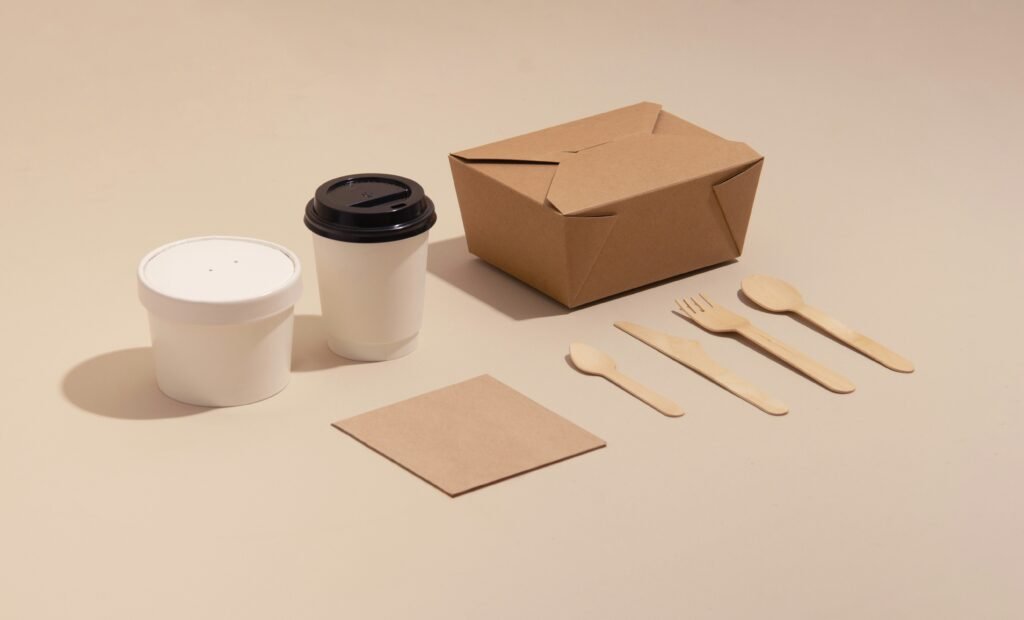
The vending machine is the enemy of every night shift worker. Not because of willpower, but because of availability. When your meal break arrives at 2 AM and nothing else is open, you eat whatever is there. An insulated food container, the kind that keeps hot food hot and cold food cold for six to eight hours, removes that problem at the source.
Research from the Society of Occupational Medicine recommends that employers provide healthy food and drink around the clock with facilities for storage and preparation, acknowledging that shift workers face structural barriers to good nutrition that day workers simply do not. Since most workplaces fall short of this, the insulated container is your infrastructure.
Pack food that is easy to digest and protein-forward. Research consistently shows that large, heavy meals during night shifts accelerate the drowsiness the 3 AM cortisol dip is already producing. Small to moderate portions built around protein, fibre, and complex carbohydrates keep energy levels stable without the crash that follows high-sugar or high-fat options.
A large reusable water bottle
Dehydration is a stealth problem on night shift. Research cited by Healthline confirms that even mild dehydration causes fatigue, headaches, and brain fog, three symptoms that are already elevated for night workers and easy to mistake for shift-related tiredness. If you are reaching for a third coffee at 4 AM, check whether you have had enough water first.
A 32-ounce insulated bottle keeps water cold through a full shift and doubles as a visual reminder to drink. Herbal teas, particularly chamomile or peppermint, are effective alternatives during the second half of a shift when adding more caffeine will damage your post-shift sleep.
How Do Night Shift Workers Stay Alert Without Destroying Their Sleep?
A strategic caffeine system
Caffeine works. The problem is how most night shift workers use it. Drinking coffee whenever tiredness hits, rather than at planned intervals, typically results in caffeine intake too late in the shift to clear the body before sleep. The CDC’s National Institute for Occupational Safety and Health recommends avoiding caffeine within six hours of intended sleep time.
The practical application: use caffeine deliberately in the first half of your shift and stop by the midpoint. If your shift ends at 7 AM and you plan to sleep by 9 AM, your last caffeine intake should be around 3 AM at the latest. This requires front-loading your alertness tools rather than chasing exhaustion with coffee as it arrives.
A nap kit for approved rest periods
If your facility allows rest breaks, a 20 to 26 minute nap taken in the first half of your shift is one of the most evidence-backed tools in any night shift survival kit. As we cover in detail in our guide to napping on night shift, NASA research found that a 26-minute nap produced a 54 percent boost in alertness and a 34 percent improvement in performance, with a 2023 Journal of Sleep Research RCT confirming these benefits specifically in overnight work contexts.
Your nap kit does not need to be elaborate. A contoured sleep mask, a pair of foam earplugs or noise-masking earbuds, and a small travel pillow that fits in a locker is enough. Set a timer. Keep it under 30 minutes. Anything longer risks sleep inertia, which leaves you groggier than before you closed your eyes.
What Personal Care Items Belong in a Night Shift Survival Kit?
Comfortable, supportive footwear
This belongs in the kit because it is the item most night shift workers say they wish they had addressed sooner. Twelve-hour shifts on hard floors in poorly supported shoes create a specific kind of end-of-shift exhaustion that compounds into chronic knee and back problems over time. Invest in footwear with adequate arch support and cushioning before the pain makes the decision for you.
Skincare basics for overnight workers
Night shift disrupts cortisol patterns and skin cell regeneration cycles. Research has found that skin keratinocytes proliferate at significantly higher rates during nighttime hours, meaning your skin is biologically primed for repair while you are at work rather than at rest. A basic overnight moisturizer applied before your post-shift sleep works with this repair window rather than against it. Keep it simple: a gentle cleanser, a hydrating moisturizer, and SPF for the walk home into morning sun.
A wind-down kit for after your shift
This is the part most night shift survival guides skip entirely, and it is where the shift’s damage either compounds or gets managed. What you do in the 60 minutes between leaving work and getting into bed determines how well you sleep and how you feel when you wake.
Your post-shift wind-down kit should include blue-blocking glasses for the commute, a low-stimulus activity for when you get home, reading, light stretching, or a warm shower, and nothing that spikes cortisol. No arguments, no stressful phone calls, no social media if the algorithm knows how to wind you up. Warm light settings in your home. A consistent routine that your nervous system starts to recognise as the signal that sleep is coming.
Building Your Night Shift Survival Kit Without Spending Everything at Once
You do not need to buy everything simultaneously. Start with the items that address your biggest current problem. If sleep is the issue, begin with blackout curtains and a white noise solution. If energy crashes are destroying your second half of shift, address the caffeine timing and food prep first. If the commute home is wrecking your ability to sleep during the day, blue-blocking glasses fix that for under thirty dollars.
Build the kit incrementally. Every item you add to your night shift survival kit removes one friction point from your night shift routine. Over months, that compounding adds up to a fundamentally different experience of overnight work. For anyone starting from scratch, our guide to the best supplements for night shift workers is worth reading alongside this one, since what you put in your body works alongside everything in this kit, not separately from it.
The goal is not perfection. Night shift will always ask something of you that day schedules do not. The kit is how you make sure it takes as little as possible.
What is the one item in your night shift survival kit that you would never work without? Drop it in the comments.